
15Ni-15Cr ODS Austenitic Steel: Microstructure and Mechanical Properties
Published by FUSHUN METAL | Advanced Nuclear Materials Research
Table of Contents
1. Introduction to ODS Austenitic Steel
Sodium-cooled fast reactors represent a key reactor type in Generation IV nuclear technology. The development path for fast reactors follows three stages: experimental fast reactors, demonstration fast reactors, and commercial fast reactors. The cladding materials in these reactors operate under extreme conditions including high temperature, high pressure, intense neutron irradiation, and corrosive environments.
Key Requirement: Cladding materials for fast reactors must possess excellent high-temperature mechanical properties, outstanding radiation stability, and good compatibility with the coolant.
Austenitic steel has become the primary cladding material for currently operating fast reactors due to its excellent high-temperature mechanical properties, good corrosion resistance, and oxidation resistance. Representative examples include D9 steel (14Cr-15Ni-0.23Ti-1.5Mo-0.9Si-1.7Mn), 15Ni-15Cr steel (15Ni-15Cr-0.4Ti-1.2Mo-0.6Si-1.5Mn-0.03P), and PNC316 steel (16Cr-14Ni-0.1Ti-2.5Mo-0.8Si-1.7Mn).
However, austenitic steel with its face-centered cubic structure exhibits significant irradiation swelling, making radiation stability a key limiting factor for its development. Oxide Dispersion Strengthened (ODS) steel, manufactured through powder metallurgy methods, introduces ultra-fine, high-density nano-oxide dispersion particles with extremely high thermal stability into the steel matrix. These particles provide excellent dislocation pinning effects and serve as traps for radiation-induced defects at the matrix-particle interfaces, significantly improving both high-temperature mechanical properties and radiation stability.
2. Experimental Process and Manufacturing
The raw materials selected for this experiment included 15Ni-15Cr pre-alloyed powder, Zr powder, and Y₂O₃ powder, all with purity of 99.99%. Both 15Ni-15Cr steel (without oxide addition) and 15Ni-15Cr ODS austenitic steel were prepared for comparative analysis.
Composition Design
| Sample | Cr (%) | Ni (%) | Mo (%) | Zr (%) | Y₂O₃ (%) | Fe |
|---|---|---|---|---|---|---|
| 15Ni-15Cr | 14.2 | 15.5 | 2.4 | 0 | 0 | Bal. |
| 15Ni-15Cr ODS | 14.2 | 15.5 | 2.4 | 0.5 | 0.35 | Bal. |
Manufacturing Process Parameters
The 15Ni-15Cr pre-alloyed powder was produced by argon gas atomization. The manufacturing process consisted of three main stages:
Mechanical Alloying (MA):
- Ball milling time: 30 hours
- Rotation speed: 300 r·min⁻¹
- Ball-to-powder mass ratio: 10:1
- Atmosphere: Argon
Hot Isostatic Pressing (HIP):
- Temperature: 1150°C
- Pressure: 120 MPa
- Holding time: 2 hours
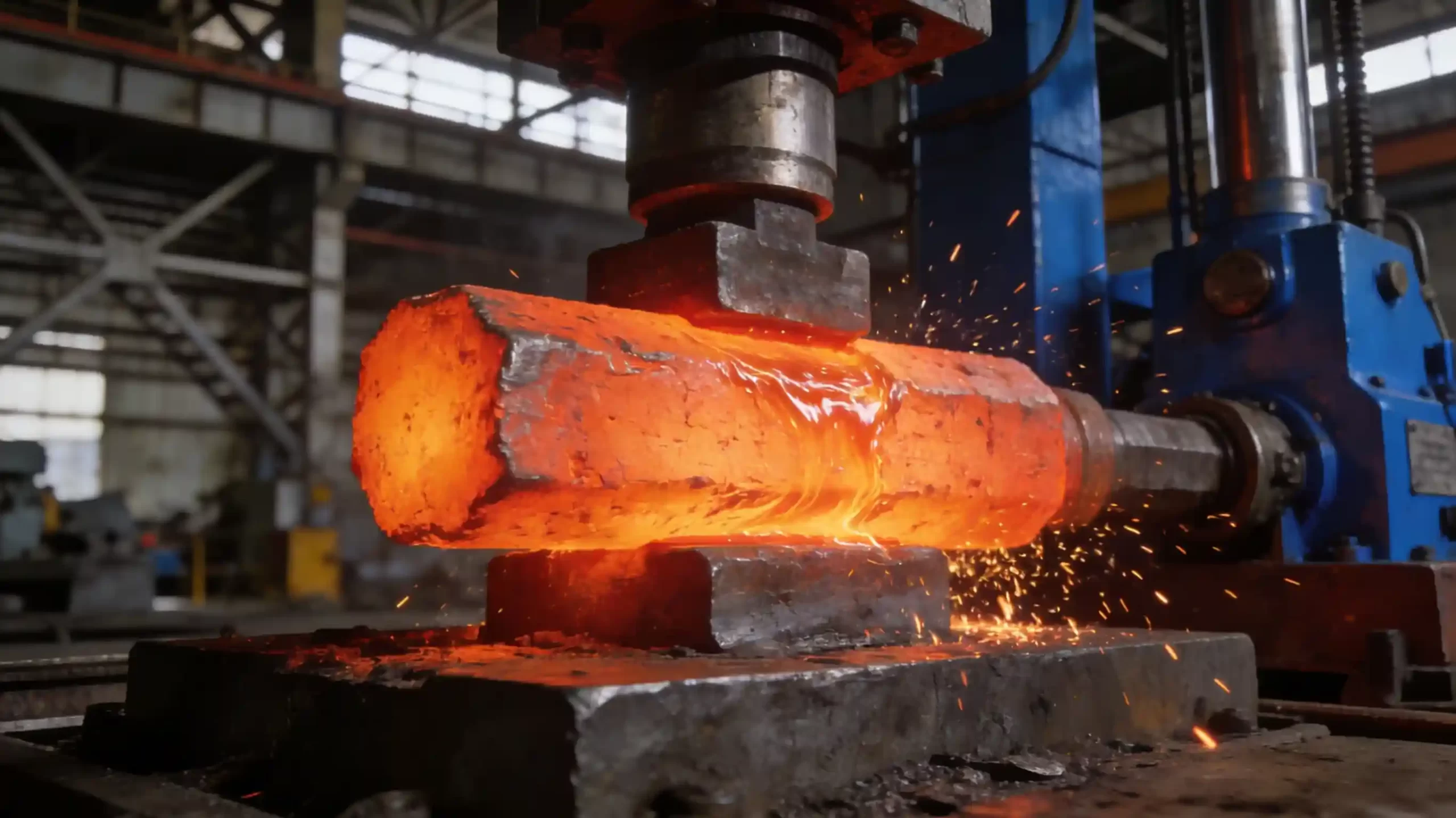
Forging Process:
- Temperature: 1100°C
- Forging area ratio: 3:1
3. Ball-Milled Powder Composition and Morphology
Composition Analysis
The elemental content of the ball-milled powder samples was measured using Inductively Coupled Plasma-Atomic Emission Spectrometry (ICP-AES) for C, N, and O content, and X-ray Fluorescence Spectroscopy (XRF) for other elements.
| Sample | Fe | Cr | Ni | Mo | Zr | Y | Al | C | N | O |
|---|---|---|---|---|---|---|---|---|---|---|
| 15Ni-15Cr | Bal. | 13.7 | 15.3 | 2.45 | — | — | 0.27 | 0.015 | 0.086 | 0.14 |
| 15Ni-15Cr ODS | Bal. | 13.0 | 15.0 | 2.46 | 0.47 | 0.25 | 0.36 | 0.010 | 0.098 | 0.29 |
The measured compositions contained a certain amount of Al element, which was likely introduced as an impurity during the mechanical alloying process. The oxygen content of 15Ni-15Cr ODS was higher than that of 15Ni-15Cr steel, consistent with the addition of Y₂O₃.
Powder Morphology
SEM observation revealed that the ball-milled 15Ni-15Cr austenitic steel powder exhibited a flattened shape with non-uniform size distribution and an average particle size of approximately 280 μm. After adding Zr powder and Y₂O₃, the mechanically alloyed 15Ni-15Cr ODS austenitic steel powder showed slight spheroidization with increased particle size.
Morphology Evolution: During high-energy ball milling, the powder particles undergo continuous collision, compression, and friction with the steel balls, between particles, and with the ball milling jar walls. This causes plastic deformation and flattening of the particles. Subsequently, under further shearing and impact, the particles fracture and create new surfaces with increased surface energy. Continued milling leads to cold welding and agglomeration of fine flattened particles, resulting in increased particle size.
4. Microstructure Analysis
Transmission electron microscopy (TEM) bright-field imaging was used to characterize the microstructure of both 15Ni-15Cr and 15Ni-15Cr ODS austenitic steels.
Grain Size Comparison
15Ni-15Cr Steel
750 nm
Average grain size
15Ni-15Cr ODS Steel
500 nm
Average grain size
The results demonstrate that adding Zr and Y₂O₃ for ODS processing effectively reduces the grain size of 15Ni-15Cr austenitic steel, achieving a significant grain refinement effect. The non-ODS 15Ni-15Cr sample showed some larger dispersed particles within the grains, possibly related to oxygen introduced during the ball milling process, where oxygen combined with alloying elements to form certain oxides.
High-magnification TEM imaging revealed that the 15Ni-15Cr ODS austenitic matrix contained twins and a large number of ultra-fine oxide dispersion particles. These oxide particles exhibited a certain pinning effect on dislocations, which positively influences the mechanical properties of 15Ni-15Cr ODS austenitic steel.
5. Oxide Dispersion Particles Characterization
TEM bright-field imaging of oxide dispersion particles in the forged 15Ni-15Cr ODS austenitic steel revealed particles ranging from several nanometers to tens of nanometers in size. These particles were primarily distributed within the grain interiors, with predominantly near-spherical morphology.
Particle Statistics
| Parameter | Value |
|---|---|
| Average Particle Size | 12.8 nm |
| Number Density | 5.5 × 10²² m⁻³ |
| Interparticle Spacing | 26 nm |
Particle Composition and Structure
High-Angle Annular Dark Field (HAADF) imaging revealed that the oxide dispersion particles were mainly composed of Y-Zr-O, with a very small number of aluminum-rich oxides also present. High-Resolution TEM (HRTEM) combined with Fast Fourier Transform (FFT) analysis was performed on particles of different sizes to obtain structural information.
Identified Oxide Phases:
- δ-Y₄Zr₃O₁₂ (PDF: 29-1389, hexagonal structure) — Primary phase for particles below 20 nm
- Al₂O₃ (PDF: 04-0880, cubic structure) — Found in larger particles (~100 nm)
For a 9.5 nm oxide dispersion particle identified as Y₄Zr₃O₁₂, FFT analysis measured interplanar spacings of 0.324 nm and 0.202 nm, corresponding to the (12̄1) and (3̄03) crystal planes respectively, with a zone axis of [1̄11]. Similarly, a 17.3 nm particle was confirmed as Y₄Zr₃O₁₂ with interplanar spacings of 0.30 nm and 0.285 nm, corresponding to the (003) and (12̄2) planes with a zone axis of [2̄10].
6. Mechanical Properties
Uniaxial tensile tests were conducted at a tensile rate of 1 mm·min⁻¹ on both forged 15Ni-15Cr and 15Ni-15Cr ODS austenitic steels at room temperature and 700°C.
Tensile Test Results Comparison
| Sample | Room Temperature | 700°C | ||||
|---|---|---|---|---|---|---|
| UTS (MPa) | YS (MPa) | TE (%) | UTS (MPa) | YS (MPa) | TE (%) | |
| 15Ni-15Cr | 814 | 603 | 16.7 | 393 | 326 | 21 |
| 15Ni-15Cr ODS | 947 | 795 | 21.9 | 554 | 458 | 7.5 |
| 15Ni-15Cr (Ref. 1) | 670 | 625 | 35 | 375 | 330 | 41 |
| 15Ni-15Cr (Ref. 2) | 690 | 523 | 50 | — | — | — |
UTS = Ultimate Tensile Strength; YS = Yield Strength; TE = Total Elongation
Key Findings
Strength Improvement: The 15Ni-15Cr ODS austenitic steel demonstrated significantly improved strength compared to both the mechanically alloyed 15Ni-15Cr steel and conventionally melted 15Ni-15Cr steel, with particularly higher improvement at elevated temperatures.
Strengthening Mechanisms: The strength enhancement is attributed to: (1) grain size reduction providing Hall-Petch strengthening, and (2) the high number density of ultra-fine nano-oxide particles distributed in the matrix. According to the Orowan strengthening mechanism, the pinning effect of oxide dispersion particles on dislocations contributes to higher strength at both room and elevated temperatures.
It should be noted that the plasticity of 15Ni-15Cr ODS austenitic steel decreased at the high temperature of 700°C (7.5% vs. 21% for non-ODS), reflecting the strength-ductility trade-off phenomenon commonly observed in ODS steels after addition of oxide dispersion particles.
7. Fracture Mechanism Analysis
SEM observation of tensile fracture surfaces was performed to analyze the fracture mechanisms of both steel types.
Room Temperature Fracture
The macroscopic fracture surface of 15Ni-15Cr austenitic steel appeared circular and relatively flat with no obvious necking, while 15Ni-15Cr ODS austenitic steel exhibited obvious necking, consistent with its higher elongation at room temperature.
15Ni-15Cr Steel (RT)
Numerous small and shallow dimples distributed on the micro-surface. Fracture mechanism: Ductile fracture
15Ni-15Cr ODS Steel (RT)
Large and deep dimples, significantly larger than non-ODS sample. Fracture mechanism: Ductile fracture
High Temperature (700°C) Fracture
At 700°C, both materials exhibited necking on the macroscopic fracture surface. The high-temperature fracture surfaces of both materials showed certain degrees of oxidation.
15Ni-15Cr Steel (700°C)
Dominated by dimple distribution. Fracture mechanism: Ductile fracture
15Ni-15Cr ODS Steel (700°C)
Large voids and tear ridges present on the surface. Fracture mechanism: Ductile-brittle mixed fracture
The large voids observed in the 15Ni-15Cr ODS steel may be formed by aggregation of small dimples or by detachment of larger oxide particles under stress. This observation is consistent with the reduced plasticity at high temperature.
8. Key Conclusions
- Powder Morphology: Ball-milled 15Ni-15Cr austenitic steel powder exhibited a flattened shape, while 15Ni-15Cr ODS austenitic steel powder showed slight spheroidization after Zr and Y₂O₃ addition.
- Grain Refinement: The grain size of 15Ni-15Cr austenitic steel was 0.75 μm, while 15Ni-15Cr ODS austenitic steel achieved a finer grain size of 0.5 μm.
- Oxide Particles: The matrix of 15Ni-15Cr ODS austenitic steel contained large quantities of oxide dispersion particles, primarily δ-Y₄Zr₃O₁₂ with a small amount of Al₂O₃. Average particle size: 12.8 nm, number density: 5.5×10²² m⁻³, interparticle spacing: 26 nm.
- Mechanical Properties: 15Ni-15Cr ODS austenitic steel demonstrated significantly higher strength (947 MPa at RT, 554 MPa at 700°C) compared to non-ODS steel (814 MPa at RT, 393 MPa at 700°C).
- Fracture Mechanism: At room temperature, both steels exhibited ductile fracture. At 700°C, 15Ni-15Cr maintained ductile fracture while 15Ni-15Cr ODS showed ductile-brittle mixed fracture.
9. Frequently Asked Questions
Q: What is 15Ni-15Cr ODS austenitic steel?
15Ni-15Cr ODS austenitic steel is an oxide dispersion strengthened steel based on 15Ni-15Cr austenitic stainless steel matrix, enhanced with nano-scale oxide particles (primarily Y-Zr-O) to improve high-temperature mechanical properties and radiation resistance for nuclear reactor applications.
Q: What are the main oxide particles in 15Ni-15Cr ODS steel?
The main oxide dispersion particles in 15Ni-15Cr ODS steel are δ-Y₄Zr₃O₁₂ with hexagonal structure, along with a small amount of Al₂O₃. These particles have an average size of 12.8 nm and number density of 5.5×10²² m⁻³.
Q: Why is ODS steel preferred for fast reactor cladding?
ODS steel is preferred for fast reactor cladding due to its excellent high-temperature mechanical properties and superior radiation resistance. The nano-oxide particles provide dislocation pinning effects and act as sinks for radiation-induced defects, significantly reducing swelling. The interfaces between oxide particles and the matrix serve as traps for irradiation-produced defects.
Q: What is the tensile strength of 15Ni-15Cr ODS steel at 700°C?
At 700°C, 15Ni-15Cr ODS austenitic steel exhibits an ultimate tensile strength of 554 MPa with yield strength of 458 MPa, which is significantly higher than the conventional 15Ni-15Cr steel (393 MPa ultimate tensile strength). This represents approximately 41% improvement in high-temperature strength.
Q: How is 15Ni-15Cr ODS steel manufactured?
15Ni-15Cr ODS steel is manufactured through a three-step powder metallurgy process: (1) mechanical alloying of pre-alloyed powder with Zr and Y₂O₃ additions at 300 r·min⁻¹ for 30 hours in argon atmosphere, (2) hot isostatic pressing (HIP) at 1150°C/120MPa for 2 hours for densification, and (3) subsequent forging at 1100°C with a 3:1 area ratio to further improve density.
FUSHUN METAL — Your trusted partner for advanced specialty steel solutions
For more information about our nuclear-grade steel products and technical specifications, please contact our technical team.