
2205 (UNS S31803) Duplex Stainless Steel Reinforcement Bars
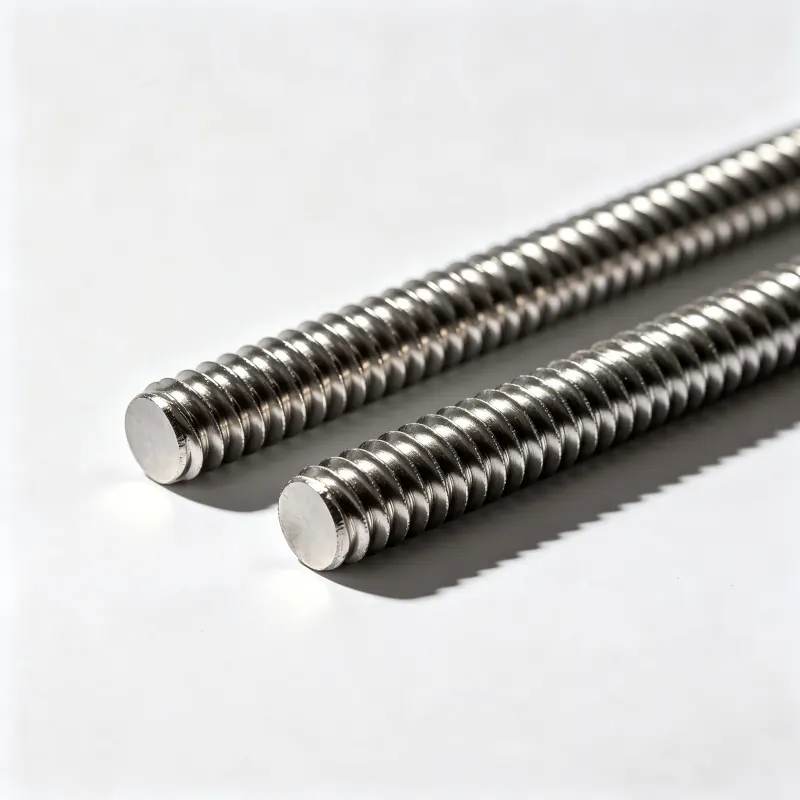
When extraordinary strength and exceptional corrosion resistance must converge in a single reinforcement solution, duplex stainless steel answers the call. FUSHUN METAL (Hunan Fushun Metal Co., Ltd.), a global manufacturer and exporter of specialty steel products, produces 2205 (UNS S31803) deformed and plain duplex stainless steel reinforcement bars in full conformance with ASTM A955/A955M — the standard specification for deformed and plain stainless steel bars for concrete reinforcement. With manufacturing expertise spanning ASTM, EN, DIN, and JIS standards, our 2205 reinforcement bars deliver a uniquely powerful combination of high strength and chloride corrosion resistance that outperforms conventional austenitic grades in the most demanding environments.
Request a Quote for 2205 duplex stainless steel reinforcement bars today.
Chemical Composition
The dual-phase microstructure and superior performance of 2205 are products of its precisely balanced, high-alloy chemistry. FUSHUN METAL performs a heat analysis from test samples taken during the pouring or casting of every heat, ensuring full compliance with ASTM A955/A955M Table 2 for UNS S31803.
| Element | Composition % |
|---|---|
| Carbon (C) | 0.03 max. |
| Manganese (Mn) | 2.00 max. |
| Phosphorus (P) | 0.045 max. |
| Sulfur (S) | 0.020 max. |
| Silicon (Si) | 1.00 max. |
| Chromium (Cr) | 21.00 – 23.00 |
| Nickel (Ni) | 4.50 – 6.50 |
| Molybdenum (Mo) | 2.50 – 3.50 |
| Nitrogen (N) | 0.08 – 0.20 |
2205 is a nitrogen-enhanced duplex stainless steel with a balanced ferritic-austenitic microstructure. Its high chromium, molybdenum, and nitrogen content delivers outstanding resistance to chloride-induced pitting and crevice corrosion, significantly surpassing that of standard 304 and 316L grades. At the same time, the duplex structure provides roughly twice the yield strength of conventional austenitic stainless steels. When compared to nickel-based alloys, 2205 offers a compelling strength-to-cost ratio while maintaining excellent corrosion performance. The low carbon content ensures good weldability and resistance to intergranular corrosion. When required, a product analysis can be performed and will conform to the tolerances of ASTM A484/A484M.
Heat Treatment Condition
The mechanical and corrosion-resistant properties of 2205 reinforcement bars are directly governed by the heat treatment condition at the time of manufacture. FUSHUN METAL supplies bars in the following conditions, as defined in ASTM A276 and referenced by ASTM A955/A955M:
- Annealed (A)
- Hot Rolled (HR)
- Strain Hardened (B)
Proper heat treatment is essential for duplex stainless steels to avoid the formation of deleterious intermetallic phases. The selection of heat treatment condition is a critical design decision that determines the baseline strength, ductility, and corrosion resistance. Any post-delivery heat treatment may alter the carefully engineered properties. The standard cautions that no re-treatment should be performed without retesting to the full requirements of ASTM A955/A955M.
Size
FUSHUN METAL manufactures 2205 deformed bars in the complete range of standard bar designation numbers listed in ASTM A955/A955M Table 1. The nominal dimensions correspond to a plain round bar of equal weight per foot. Note that duplex alloys fall under the 400 Series/Duplex Alloys density designation in the standard.
| Bar Designation No. | Nominal Diameter, in. [mm] | Nominal Weight, lb/ft [kg/m] (400/Duplex Series) |
|---|---|---|
| 3 [10] | 0.375 [9.5] | 0.374 [0.556] |
| 4 [13] | 0.500 [12.7] | 0.679 [1.011] |
| 5 [16] | 0.625 [15.9] | 1.048 [1.559] |
| 6 [19] | 0.750 [19.1] | 1.495 [2.225] |
| 7 [22] | 0.875 [22.2] | 2.038 [3.032] |
| 8 [25] | 1.000 [25.4] | 2.685 [3.995] |
| 9 [29] | 1.128 [28.7] | 3.396 [5.053] |
| 10 [32] | 1.270 [32.3] | 4.312 [6.416] |
| 11 [36] | 1.410 [35.8] | 5.296 [7.880] |
| 14 [43] | 1.693 [43.0] | 7.64 [11.37] |
| 18 [57] | 2.257 [57.3] | 13.59 [20.22] |
Plain rounds in diameters up to and including 2 in. [50.8 mm] are also available for dowels, spirals, and structural ties. Bars are supplied in standard or custom-cut lengths to match project specifications.
Grade (Strength Level)
2205 bars are produced in three minimum yield strength grades, as prescribed in ASTM A955/A955M. Thanks to the inherent high strength of the duplex microstructure, 2205 readily exceeds the minimum requirements for all three grades, offering designers the flexibility to select a higher strength grade with confidence. For structural applications where weight optimization is critical, high-strength structural steel concepts similarly benefit from the elevated yield characteristics that duplex stainless provides.
| Grade | Tensile Strength, min | Yield Strength, min |
|---|---|---|
| Grade 40 [300] | 70,000 psi [500 MPa] | 40,000 psi [300 MPa] |
| Grade 60 [420] | 90,000 psi [620 MPa] | 60,000 psi [420 MPa] |
| Grade 75 [520] | 100,000 psi [690 MPa] | 75,000 psi [520 MPa] |
Yield strength is determined at 0.35% strain using the autographic diagram method or with an extensometer, in accordance with ASTM A370. Elongation requirements vary by bar size and grade, as defined in ASTM A955/A955M Table 3. The target grade must be clearly specified at the time of order.
Request a Quote for 2205 duplex bars in your required grade and size.
Packaging
FUSHUN METAL ensures that all 2205 reinforcement bars are properly separated and tagged with the manufacturer's heat or test identification number at the time of mill shipment. Each bundle is tagged with the following information:
- Stainless steel alloy (2205 / UNS S31803)
- Heat treatment condition
- Grade (minimum strength level)
- Supplementary requirement status (S1, if applicable)
When packaging procedures are specified in the purchase order, they conform to ASTM A700. For U.S. Government procurement, packaging complies with MIL-STD-163, and marking for shipment meets Fed. Std. No. 123 for civil agencies or MIL-STD-129 for military agencies. Every deformed bar is legibly marked on one side with the manufacturer's mill designation and the bar size designation. Plain rounds do not require rolled-on symbols; all required information is provided on the bundle tag.
Inspection
The purchaser's inspector is granted free entry at all times during contract execution to all areas of the manufacturer's works related to the production of the ordered material. FUSHUN METAL provides access to all reasonable facilities to verify that the material conforms to ASTM A955/A955M. All inspection and testing are performed at the manufacturing site prior to shipment and are conducted in a manner that does not unnecessarily interfere with plant operations.
Test
For each heat, bar size, and heat treatment condition, FUSHUN METAL performs the following tests as a minimum:
- One tension test — conducted on the full bar section, evaluated against the specified grade requirements for tensile strength, yield strength, and elongation.
- One bend test — performed on the full bar section, with the specimen bent around a pin to the degree and pin diameter prescribed in ASTM A955/A955M Table 4, without cracking on the outside radius.
- One set of dimensional property tests — including bar weight, and measurements of deformation spacing, average height, and gap, all verified against the limits in ASTM A955/A955M Table 1.
Deformation spacing is averaged from a minimum of ten spaces. Average height is determined from three measurements per deformation on at least two typical deformations. The measured weight of any deformed bar shall be at least 94% of the value specified in Table 1. If a test specimen fails due to mechanical reasons or inherent flaws, a replacement specimen is permitted. When a failure meets the retest provisions, two additional random specimens are tested. Additional corrosion resistance testing, when specified by the purchaser, is conducted under mutually agreed conditions. When Supplementary Requirement S1 is invoked for controlled magnetic permeability, testing is performed in accordance with ASTM A342, with limits agreed between manufacturer and purchaser.
Report
FUSHUN METAL issues a Material Test Report, Certificate of Inspection, or equivalent document for every order. Reports are generated on a per-heat or per-lot basis and contain:
- Stainless steel type and designation (2205 / UNS S31803)
- Chemical composition (heat analysis, and product analysis if performed)
- Heat treatment condition
- Bar size
- Tensile properties (tensile strength, yield strength, elongation)
- Bend test results
- Corrosion test results (when specified)
- Magnetic permeability results (when Supplementary Requirement S1 is invoked)
Documents transmitted via electronic data interchange (EDI) carry the same validity as printed versions. The EDI-transmitted document meets all requirements of ASTM A955/A955M, and the organization submitting the transmission is responsible for its content.
Frequently Asked Questions
What makes 2205 duplex stainless steel superior to 316L for concrete reinforcement?
2205 combines roughly twice the yield strength of 316L with significantly better resistance to chloride stress corrosion cracking and pitting. Its high chromium (21–23%), molybdenum (2.5–3.5%), and nitrogen (0.08–0.20%) content provides a Pitting Resistance Equivalent Number (PREN) well above that of 316L. This allows designers to either reduce the amount of reinforcement required or achieve substantially longer service life in extremely aggressive environments such as marine substructures, desalination plants, and chemical processing facilities.
Does 2205 require special welding procedures compared to austenitic stainless steels?
2205 is weldable, but the welding procedures must be tailored to preserve the balanced duplex microstructure and corrosion resistance. This includes controlling heat input, interpass temperatures, and using appropriate filler metals. FUSHUN METAL can provide technical guidance on welding parameters and recommends, as ASTM A955/A955M suggests, that a suitable welding procedure be established and post-weld testing be considered to verify that properties are maintained.
In what applications is 2205 reinforcement most commonly specified?
2205 is specified for the most demanding concrete structures where both mechanical loads and corrosion exposure are severe: bridge decks and substructures in coastal or de-icing salt regions, offshore oil and gas platforms, seawater intake structures, ports and harbors, desalination plants, and chemical containment structures. Its high strength-to-corrosion-resistance ratio makes it a lifecycle-cost-effective choice for these critical applications.
Is 2205 magnetic? Can it be supplied with controlled magnetic permeability?
Unlike fully austenitic grades such as 304 or 316L, 2205 duplex stainless steel is ferromagnetic due to its ferrite content. This means it will attract a magnet. If your project requires controlled magnetic permeability, please specify Supplementary Requirement S1 in your purchase order. FUSHUN METAL will work with you to establish the appropriate permeability limits and perform testing per ASTM A342, though the intrinsic magnetic character of the duplex structure must be considered.
Source 2205 Duplex Reinforcement Bars from FUSHUN METAL
FUSHUN METAL (Hunan Fushun Metal Co., Ltd.) is a trusted global manufacturer of alloy steel, nickel-based alloys, stainless steel, and tool steel. Our products serve demanding industries worldwide, backed by full compliance with international standards including ASTM, EN, DIN, and JIS. For inquiries and technical support on 2205 (UNS S31803) duplex stainless steel reinforcement bars, Request a Quote and let our engineering team help you specify the optimal grade, size, and condition for your critical infrastructure project.