
Corrosion Behavior of 38CrMoAlA Steel Under Alternating Hot-Humid and Salt-Fog Conditions for Aircraft Engine Applications
Published by FUSHUN METAL | December 22, 2025 | Category: Technical Blog
Table of Contents
Introduction
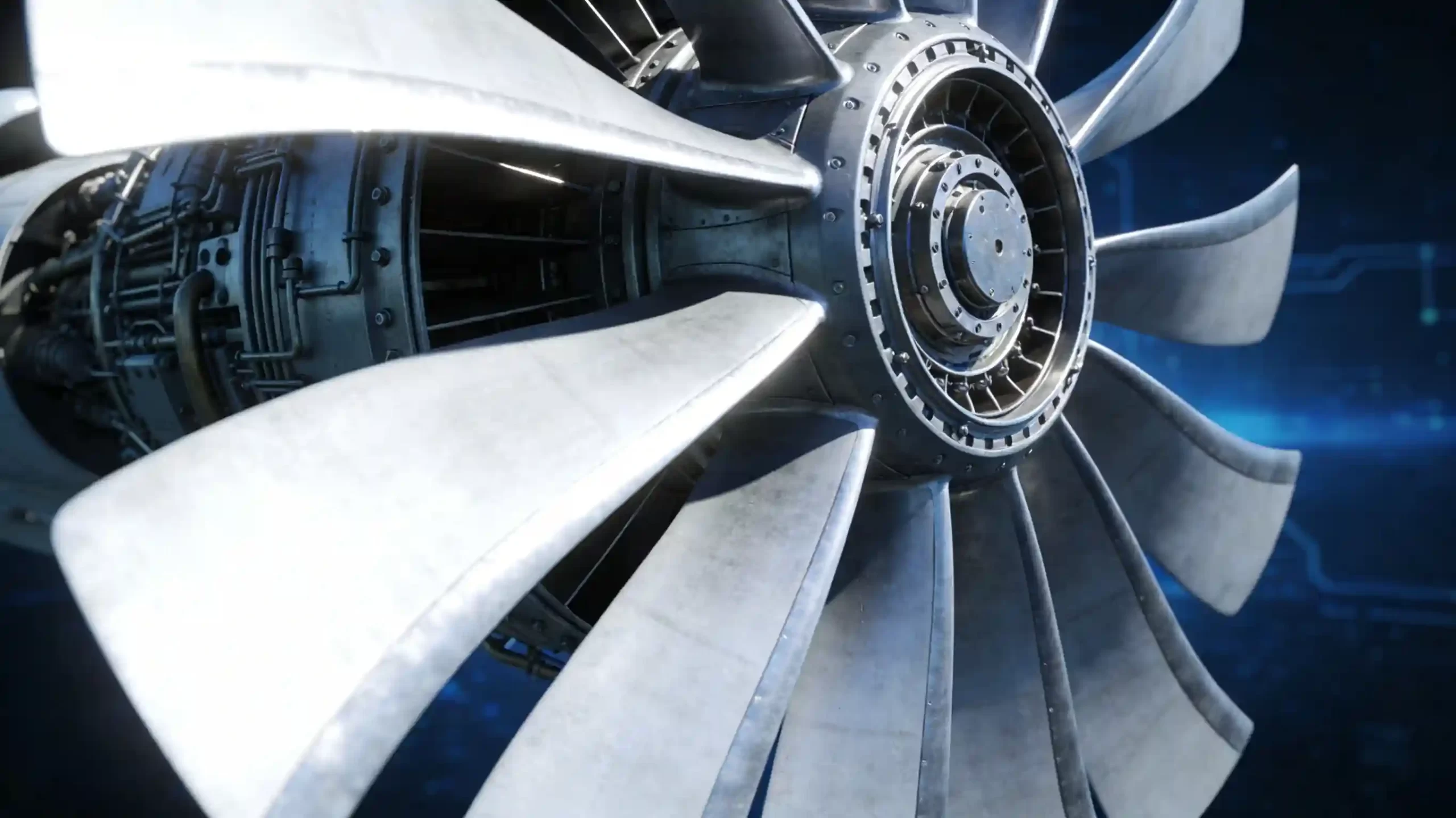
Aircraft engines serve as the core components of aircraft, with their performance directly impacting flight safety and overall operational efficiency. The blower drive shaft within aircraft engines functions as a critical transmission device, undertaking the essential task of power transmission. During flight operations, these drive shafts frequently face severe challenges from complex environments including high temperatures, humidity, and salt fog conditions.
Key Challenge: In marine climates, the alternating effects of humidity, salt fog, and seawater significantly impact material corrosion resistance and mechanical properties. Long-term exposure to these environmental conditions readily causes corrosion reactions on material surfaces, forming corrosion pits and cracks that lead to decreased mechanical properties and shortened component service life.
38CrMoAlA steel, as an alloy structural steel, is widely used in aerospace applications due to its excellent strength, hardness, wear resistance, and superior surface treatment properties. After surface nitriding treatment, the fatigue resistance and wear resistance of 38CrMoAlA steel are significantly enhanced. However, despite its superior mechanical properties, existing research indicates that the corrosion resistance and mechanical properties of 38CrMoAlA steel still face severe challenges under alternating hot-humid and salt-fog environments, particularly under the combined corrosion effects of marine environments.
This study systematically investigates the corrosion behavior changes of 38CrMoAlA steel under simulated hot-humid and salt-fog alternating environments, as well as their effects on mechanical properties, analyzing the corrosion failure mechanisms to provide theoretical basis and practical guidance for material selection, design, and corrosion protection measures for aircraft engine blower drive shafts.
Materials and Test Methods
Sample Preparation
The experiments utilized 38CrMoAlA steel processed into disc-shaped corrosion simulation samples (diameter 80 mm, thickness 4.5 mm) and rod-shaped mechanical test samples. All samples were uniformly numbered and identified. Corrosion simulation samples and tensile test samples used 3 parallel samples per cycle, while fatigue limit samples used 16 parallel samples per cycle.
After processing, samples were sequentially cleaned with deionized water and anhydrous ethanol, then dried with cold air. The appearance, weight, and dimensions of samples were subsequently recorded.
Test Conditions
| Test Type | Standard | Conditions | Duration |
|---|---|---|---|
| Hot-Humid Test | GJB 150.9A-2009 | RH: (95±5)%, Temp: (43±2)°C | 7 days |
| Neutral Salt Spray | GJB 150.11A-2009 | Temp: (35±2)°C, NaCl: (5±0.1)%, pH: 6.5-7.5 | 4 days |
| Acidic Salt Spray | GJB 150.11A-2009 | Temp: (35±2)°C, pH: 3.5-4.5 (H₂SO₄ adjusted) | 3 days |
Both corrosion simulation samples and mechanical test samples underwent hot-humid and salt-fog alternating tests, with each complete cycle constituting one test period. Surface morphology and composition of corrosion products were characterized using Scanning Electron Microscopy (SEM) and Energy Dispersive Spectroscopy (EDS). Corrosion products were removed according to ASTM G1-03 standard, corrosion rates were calculated using the weight loss method, and corrosion depths were determined using laser confocal microscopy.
Corrosion Simulation Test Results
Macroscopic Morphology Evolution
The macroscopic morphology of 38CrMoAlA steel underwent significant changes throughout the test cycles:
- Pre-test: Sample surfaces were smooth, displaying the natural metallic color.
- After 1 Cycle: Surfaces became covered with a layer of black and red mixed corrosion products, predominantly black with minor reddish-brown areas. Products were loose, with only small regions remaining uncorroded.
- After 3 Cycles: Corrosion products became denser and noticeably thicker, with uniform oxide layer formation on surfaces.
- After 5 Cycles: Corrosion further intensified with denser corrosion product layers, predominantly brick-red in color. Surface protrusions appeared, indicating localized deep corrosion.
Corrosion Rate Analysis
The average corrosion rate of 38CrMoAlA steel showed rapid increase in initial test stages, with corrosion occurring quickly. Subsequently, rates in Cycles 3 and 5 continued to increase but with gradually diminishing increments. In contrast, local corrosion rates showed opposite trends—initially decreasing rapidly, then slowing down after Cycles 3 and 5.
Key Finding: According to ASTM G217 standard, if the ratio of local corrosion rate to average corrosion rate (α) exceeds 2, material corrosion is considered severe with high service failure risk. After 3 cycles, α < 2, indicating good service performance under these environmental conditions.
Microscopic Morphology and Composition Analysis
SEM analysis revealed the following progression of corrosion morphology:
| Cycle | Morphology Characteristics | Corrosion Product Shape |
|---|---|---|
| 1 Cycle | Light corrosion, localized small pits, overall structure intact | Leaf-like or needle-shaped |
| 3 Cycles | Intensified corrosion, abundant products, deepened corrosion at grain boundaries | Needle or flake-shaped |
| 5 Cycles | Obvious pores and spalling, dense smooth products, localized bulging | Dense smooth layer |
EDS results indicated that corrosion product composition remained relatively simple across all three cycles, primarily consisting of accumulated Fe and O elements. Based on atomic ratios, the corrosion products are likely a mixture of Fe₃O₄ and Fe₂O₃, with no other corrosion products detected.
Corrosion Pit Depth Measurements
Three-dimensional morphology analysis after corrosion product removal revealed significant pit depth progression:
| Test Cycle | Maximum Pit Depth (μm) | Surface Characteristics |
|---|---|---|
| 1 | 285.5 | Rough surface with visible corrosion marks, structure relatively intact |
| 3 | 506.37 | Rougher surface, densely distributed pits, localized large pits |
| 5 | ~520 | Damaged surface structure, severe substrate corrosion, expanded pit area |
Mechanical Properties Test Results
Tensile Test Results
Stress-strain curves demonstrated that the 0-cycle curve was highest, indicating the material possessed high tensile strength and plasticity before testing. As cycles increased, curves progressively shifted downward, with the 5-cycle curve showing significant decreases in both tensile strength and plasticity.
| Property | Pre-Test | After 5 Cycles | Reduction |
|---|---|---|---|
| Tensile Strength (σb) | 980 MPa | 870 MPa | -11% |
| Yield Strength (σp0.2) | 842 MPa | 307 MPa | -64% |
| Elongation at Break (δ) | 18% | 6% | -67% |
| Reduction of Area (Ψ) | 63% | 33% | -48% |
Tensile Fracture Analysis
Original sample tensile fracture cross-sections showed no pits, displaying typical dimple fracture characteristic of micropore coalescence-type fracture. Under tensile stress, nearly circular equiaxed dimples formed. These dimples interconnected and necked internally as external forces gradually increased, eventually forming internal cracks and leading to final fracture.
After 1-cycle testing, mild corrosion pits appeared on sample surfaces, serving as crack sources. Under stress, these locations became sites of stress concentration, forming cracks that further propagated. After Cycles 3 and 5, deep corrosion occurred with multiple large and deep corrosion pits appearing on the substrate surface, along with corrosion product spalling. The reduced substrate outer diameter led to significant decreases in tensile strength and yield strength, while elongation and reduction of area simultaneously decreased, ultimately causing easier material failure and fracture.
Fatigue Limit Test Results
Fatigue limits were measured using the staircase method based on 10⁷ cycles with a stress ratio of -1. The results demonstrated dramatic degradation:
| Test Cycle | Median Fatigue Limit (MPa) | Standard Deviation (MPa) | Retention Rate |
|---|---|---|---|
| 0 (Pre-test) | 752.27 | 17.5 | 100% |
| 1 | 400 | 16.9 | 53% |
| 3 | 225 | — | 30% |
| 5 | 218 | — | 29% |
Critical Finding: The median fatigue limit decreased by approximately 70% from 752 MPa to 218 MPa after 5 cycles of hot-humid and salt-fog alternating tests, indicating severe material damage that dramatically reduced fatigue performance.
Fatigue Fracture Analysis
Original sample fatigue fractures displayed distinct radial crack morphology, with cracks extending from the fracture center outward. This radial crack propagation is a typical feature of fatigue crack growth, indicating multiple cyclic stress applications. Clear crack paths indicated uniform crack propagation before testing.
After 1 cycle, fractures showed rough, irregular surfaces with obvious pores and depression zones—these being corrosion pits or cavities. The presence of corrosion pits caused local stress concentration, further accelerating crack initiation and propagation. After corrosion, material fatigue strength was significantly reduced. Corrosion products may have accumulated in certain areas during the fracture process, causing local material spalling and forming obvious corrosion pits.
Corrosion Damage Mechanism Analysis
Electrochemical Reactions
In the alternating hot-humid and salt-fog environment, the hot-humid conditions promoted hydration and oxidation reactions on the metal surface:
2Fe + 2H₂O + O₂ → 2Fe(OH)₂
4Fe(OH)₂ + O₂ + 2H₂O → 4Fe(OH)₃ → 2Fe₂O₃·H₂O
Fe³⁺ + 3Cl⁻ → FeCl₃
Role of Chloride Ions
Corrosion pits transitioned from uniform distribution to localized concentration. This phenomenon was caused by Cl⁻ enrichment in local areas. The destructive effect of Cl⁻ on oxide films under salt-fog conditions intensified pitting corrosion expansion.
From a corrosion mechanism perspective, Cl⁻ penetrated into the substrate interior by destroying the oxide film on the metal surface, forming local activation points. These activation points gradually developed into deep pits, ultimately triggering pitting corrosion and crack propagation. The regeneration rate of the oxide film could not cover exposed metal areas, causing accelerated local corrosion.
Impact on Mechanical Performance
The mechanical property degradation of 38CrMoAlA steel after testing was primarily attributed to:
- Stress concentration effects induced by corrosion pits
- Reduced effective load-bearing area due to pitting and crack propagation
- Intergranular crack formation around corrosion pits that rapidly expanded under loading
Particularly in fracture analysis, corrosion pits served as the starting positions for crack propagation during loading. SEM revealed large numbers of intergranular cracks forming around corrosion pits, which rapidly expanded during loading, causing early sample failure. Additionally, the loss of load-bearing capacity caused by pitting severely reduced the material’s ability to withstand cyclic loading, further accelerating material failure.
Conclusions
- Accelerated Corrosion: The alternating hot-humid and salt-fog environment significantly accelerated the corrosion behavior of 38CrMoAlA steel, with Cl⁻ in salt fog being the primary cause of intensified corrosion.
- Mechanical Degradation: Corrosion damage significantly reduced the material’s tensile strength, fatigue limit, and plastic deformation capacity. The mechanism lies in stress concentration effects induced by pitting and crevice corrosion.
- Fatigue Crack Influence: The depth and distribution of corrosion pits have decisive influence on fatigue crack initiation and propagation, with median fatigue limit reduction of approximately 70%.
These findings provide comprehensive understanding of corrosion mechanisms and associated mechanical degradation of 38CrMoAlA steel when exposed to marine environmental conditions. The observed deterioration underscores the importance of developing advanced protective strategies to mitigate corrosion effects and extend the operational life of critical components such as aircraft engine blower drive shafts.
Frequently Asked Questions
This technical article is provided by FUSHUN METAL
For more information about specialty steel products and applications, please visit our website.