
1.4021 X20Cr13 Martensitic Stainless Steel Technical Guide
FUSHUN SPECIAL STEEL Professional Guide
Overview of 1.4021 X20Cr13 Martensitic Stainless Steel
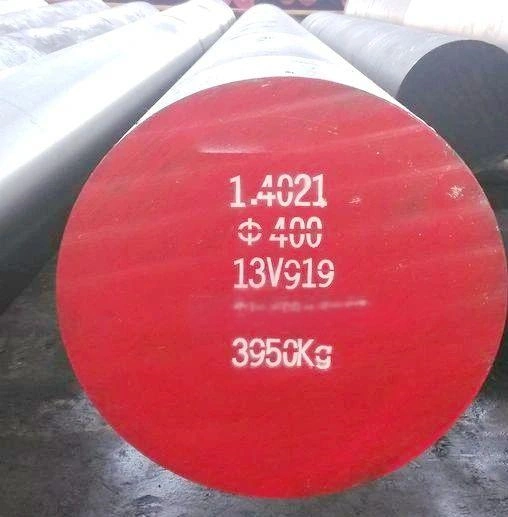
The 1.4021 X20Cr13 represents a fundamental grade within the martensitic stainless steel family, distinguished by its unique combination of moderate corrosion resistance and exceptional mechanical properties achievable through heat treatment. This steel grade, standardized under European EN specifications, has established itself as a reliable material choice across diverse industrial sectors requiring both strength and environmental resistance.
Martensitic stainless steels derive their designation from the characteristic martensitic microstructure that forms during controlled cooling from elevated temperatures. Unlike austenitic stainless steels, which remain non-magnetic and soft, martensitic grades like 1.4021 exhibit magnetic properties and can be hardened significantly through appropriate heat treatment cycles. This fundamental metallurgical characteristic opens applications where both corrosion resistance and high mechanical strength are simultaneously required.
The X20Cr13 designation indicates the approximate chemical composition, with X representing stainless steel classification, 20 indicating 0.20% average carbon content, Cr denoting chromium as the primary alloying element, and 13 representing approximately 13% chromium content. This composition provides the minimum chromium level necessary for stainless characteristics while maintaining sufficient carbon for effective hardening through heat treatment.
FUSHUN SPECIAL STEEL has manufactured 1.4021 X20Cr13 for over four decades, developing specialized production techniques that ensure consistent quality and optimal mechanical properties. The company’s expertise in martensitic stainless steel production encompasses precise chemical control, optimized melting practices, and comprehensive quality assurance protocols that meet international standards for critical applications.
Key Characteristics:
- Martensitic microstructure enabling high strength through heat treatment
- Magnetic properties suitable for electromagnetic applications
- Good machinability in annealed condition
- Moderate corrosion resistance in non-chloride environments
- Density of 7.7 g/cm³ for weight-critical applications
Industrial Applications and Sector Usage
Pump and Valve Manufacturing
The pump and valve industry extensively utilizes 1.4021 for manufacturing critical flow control components requiring both corrosion resistance and mechanical durability. Valve stems benefit from the steel’s ability to maintain dimensional stability under cyclic loading while resisting corrosion from process fluids. Pump impellers manufactured from 1.4021 demonstrate excellent performance in applications handling mildly corrosive liquids, particularly in industrial cooling systems and general water service applications.
Valve seats and pump housings fabricated from this grade offer superior wear resistance compared to standard carbon steels while maintaining cost-effectiveness relative to higher-alloy stainless grades. The material’s excellent machinability enables precise manufacturing of complex internal geometries required in modern valve designs, including ball valves, gate valves, and specialized flow control devices.
Automotive and Transportation Sector
Automotive applications leverage 1.4021’s combination of strength and moderate corrosion resistance for exhaust system components, fuel system parts, and engine accessories. Exhaust manifold components benefit from the steel’s ability to maintain structural integrity at elevated temperatures while resisting oxidation and thermal cycling effects. The material’s magnetic properties make it suitable for sensor applications and electromagnetic components within automotive systems.
Fuel injection components, including fuel rails and injector bodies, utilize 1.4021’s corrosion resistance to modern fuel formulations while providing the strength necessary to withstand high-pressure fuel systems. The steel’s cleanability and resistance to fuel additives make it particularly valuable in direct injection systems where component cleanliness directly affects performance.
Mechanical Engineering and Machinery
Mechanical engineering applications exploit 1.4021’s hardenability for manufacturing precision shafts, spindles, and transmission components. The steel’s ability to achieve hardness levels around HRC 46 in the quenched condition, combined with good toughness after tempering, makes it ideal for rotating machinery components subjected to cyclic loading and wear conditions.
Piston rods in hydraulic and pneumatic systems benefit from 1.4021’s surface hardness and corrosion resistance, particularly in applications where seal compatibility and surface finish are critical. The material’s dimensional stability during heat treatment enables manufacturing of precision components with tight tolerances required in modern machinery applications.
Food Processing and Kitchen Equipment
Food processing equipment manufacturers utilize 1.4021 for cutting tools, food preparation blades, and processing equipment components requiring both sharpness retention and hygiene compliance. The steel’s ability to achieve high hardness levels while maintaining polishability ensures excellent cutting performance and easy cleaning required in food service applications.
Kitchen knife manufacturing represents a significant application where 1.4021’s balance of hardness, edge retention, and corrosion resistance provides excellent performance for both professional and consumer applications. The material’s response to heat treatment allows optimization of hardness profiles to achieve desired cutting performance characteristics.
Fastener and Hardware Applications
High-strength fastener applications utilize 1.4021’s combination of mechanical properties and corrosion resistance for bolts, nuts, and specialty hardware components. The steel’s magnetic properties facilitate handling and sorting during manufacturing processes while providing reliable performance in mildly corrosive environments where standard carbon steel fasteners would require protective coatings.
Chemical Composition and Elemental Functions
| Element | Content (%) | Primary Function | Effect on Properties |
|---|---|---|---|
| Carbon (C) | 0.16 – 0.25 | Hardening element | Enables martensitic transformation and strength |
| Chromium (Cr) | 12.0 – 14.0 | Corrosion resistance | Forms passive oxide layer protection |
| Silicon (Si) | max 1.0 | Deoxidizer | Improves strength and cleanliness |
| Manganese (Mn) | max 1.5 | Hardenability | Enhances through-hardening capability |
| Phosphorus (P) | max 0.04 | Controlled impurity | Limited to prevent brittleness |
| Sulfur (S) | max 0.015 | Controlled impurity | Minimized for optimal properties |
Carbon Content Optimization
The carbon content range of 0.16-0.25% in 1.4021 represents a carefully optimized balance between hardenability and corrosion resistance. This carbon level enables formation of sufficient martensite during quenching to achieve useful hardness levels while maintaining the minimum chromium-to-carbon ratio necessary for stainless steel classification. Higher carbon content would increase maximum achievable hardness but would reduce corrosion resistance by tying up chromium in carbide formation.
Chromium’s Dual Role
The 12.0-14.0% chromium content serves dual functions in 1.4021, providing both corrosion resistance through passive film formation and contributing to steel strength through solid solution strengthening. This chromium level represents the minimum required for stainless steel classification, forming a thin but effective passive oxide layer that protects against atmospheric corrosion and mild chemical environments.
Controlled Impurity Management
Phosphorus and sulfur levels are strictly controlled in 1.4021 production to maintain optimal mechanical properties and corrosion resistance. Phosphorus segregation can cause brittleness and reduce impact toughness, while excessive sulfur can form sulfide inclusions that compromise both mechanical properties and corrosion resistance. FUSHUN SPECIAL STEEL’s advanced melting and refining processes ensure these elements remain well below specified maximums.
Heat Treatment Processes and Performance
Annealing Operations
Annealing of 1.4021 is performed at temperatures between 825-745°C followed by air cooling to achieve a soft, machinable condition. This treatment produces a ferritic structure with dispersed carbides, resulting in maximum hardness of 230 HB and excellent machinability characteristics. The annealed condition is ideal for extensive machining operations and serves as the starting condition for subsequent hardening treatments.
Annealing Parameters:
- Temperature: 825-745°C
- Cooling: Air cooling
- Hardness: Maximum 230 HB
- Structure: Ferritic with carbides
Hardening and Quenching
Hardening of 1.4021 involves austenitizing at temperatures between 1050-950°C followed by quenching in oil, polymer, or air depending on section thickness and desired properties. The austenitizing temperature must be carefully controlled to ensure complete carbide dissolution while avoiding excessive grain growth. Proper quenching produces a martensitic structure with hardness around HRC 46.
The transformation temperatures for 1.4021 are critical for successful heat treatment, with Ac1 approximately 790°C, Ac3 around 850°C, Ms approximately 240°C, and Mf around 90°C. Understanding these temperatures enables optimization of heating cycles and cooling rates to achieve desired microstructures and properties.
Tempering for Optimal Properties
Tempering operations at 700°C (QT700 condition) provide the optimal balance of strength and toughness for most applications. This treatment produces tensile strengths of 700-850 N/mm² with yield strengths around 500 N/mm² and elongation values of 13% minimum. The QT700 condition represents the most commonly specified heat treatment state for structural and mechanical applications.
Higher tempering temperatures around 800°C (QT800 condition) produce slightly higher strength levels with tensile strengths of 800-950 N/mm² and yield strengths around 600 N/mm², though with reduced elongation values around 12%. The choice between QT700 and QT800 conditions depends on specific application requirements for strength versus ductility.
Available Product Forms and Dimensions
FUSHUN SPECIAL STEEL supplies 1.4021 X20Cr13 in comprehensive product forms to meet diverse manufacturing requirements. The company’s production capabilities encompass traditional mill products as well as specialized forms for specific applications.
Round Bars and Solid Rounds
Round bars represent the primary product form for 1.4021, available in diameters ranging from 5mm to 600mm to accommodate applications from small precision components to large structural elements. Hot-rolled rounds provide cost-effective material for applications where surface finish is secondary, while cold-drawn bars offer improved dimensional accuracy and surface quality for precision machining applications.
Machined rounds with various surface finishes are available, including turned, peeled, and ground conditions. These prepared surfaces reduce machining time and ensure consistent starting dimensions for critical applications. Centerless ground bars provide the highest dimensional accuracy and surface finish quality for applications requiring minimal additional machining.
Flat Bars and Rectangular Sections
Flat bars in various thickness and width combinations provide material for fabricating valve components, brackets, and structural elements. The flat geometry enables efficient material utilization for applications requiring specific cross-sectional properties. Hot-rolled flats offer economical solutions for less demanding applications, while cold-rolled materials provide superior surface finish and dimensional precision.
Plates and Sheet Materials
Plate materials are available in various thicknesses for fabrication applications requiring larger flat sections. These materials are particularly useful for manufacturing valve bodies, pressure vessel components, and structural applications where welding and forming operations are required. Sheet materials provide thin-section options for stamping and forming applications.
Forged Components and Special Shapes
Forged components offer enhanced mechanical properties through grain flow optimization and material consolidation. The hot forging temperature range of 1100-800°C allows effective shaping while maintaining material integrity. Forged components typically exhibit superior strength characteristics compared to machined parts from bar stock due to favorable grain structure development during the forging process.
Available Surface Conditions:
- Black Surface: Hot-rolled condition as produced
- Ground: Bright surface with controlled roughness
- Machined: Precision turned with minimal surface defects
- Peeled/Turned: Continuous surface removal for uniformity
- Polished: Mirror finish for critical applications
International Equivalent Grades and Standards
| Country/Region | Standard | Primary Designation | Alternative Names |
|---|---|---|---|
| Europe | EN | X20Cr13 (1.4021) | – |
| United States | AISI/UNS | 420 / S42000 | 420A, S42010 |
| Japan | JIS | SUS420J1 | – |
| Germany | DIN | X20Cr13 | 1.4021, WNr 1.4021 |
| China | GB | 2Cr13 | – |
| Russia | GOST | 20KH13 | – |
| United Kingdom | BS | 420S29 | 420S37 |
| South Korea | KS | STS420J1 | – |
Standards Harmonization
The international equivalency of 1.4021 demonstrates successful harmonization of stainless steel standards across major industrial markets. While nomenclature varies by region, chemical compositions and mechanical properties remain essentially identical, facilitating global trade and engineering specification. This standardization enables sourcing flexibility and ensures consistent performance regardless of geographic origin.
Regional Specification Differences
While equivalent grades maintain similar chemical compositions, regional standards may differ in testing methods, acceptance criteria, and documentation requirements. European EN standards emphasize statistical process control and traceability, American ASTM standards focus on performance verification, and Japanese JIS standards incorporate specific quality control procedures reflecting regional manufacturing practices.
Martensitic Stainless Steel Family Classification
1.4021 X20Cr13 belongs to the martensitic stainless steel family, representing one of five major stainless steel categories alongside austenitic, ferritic, duplex, and precipitation-hardening grades. Martensitic stainless steels distinguish themselves through their ability to develop high strength and hardness via heat treatment while maintaining reasonable corrosion resistance in moderate environments.
Related Martensitic Grades
The martensitic family includes several related grades with varying carbon contents to optimize specific properties. Lower carbon grades like 1.4006 (X12Cr13) provide enhanced corrosion resistance but reduced maximum hardness, while higher carbon grades such as 1.4028 (X30Cr13) and 1.4031 (X39Cr13) achieve greater hardness levels with some reduction in corrosion resistance and toughness.
Common Martensitic Grades:
- 1.4006 (X12Cr13): Lower carbon, enhanced corrosion resistance
- 1.4021 (X20Cr13): Balanced properties, general purpose
- 1.4028 (X30Cr13): Higher hardness, reduced ductility
- 1.4031 (X39Cr13): Maximum hardness capability
- 1.4034 (X46Cr13): Very high carbon, cutting tool applications
Modified Martensitic Compositions
Advanced martensitic grades incorporate additional alloying elements to enhance specific properties. Molybdenum-bearing grades like 1.4122 (X39CrMo17-1) provide improved high-temperature strength and corrosion resistance, while vanadium additions in grades such as 1.4116 (X50CrMoV15) enhance wear resistance and grain refinement for cutting tool applications.
Precipitation Hardening Variants
Precipitation hardening stainless steels represent an evolution of martensitic metallurgy, combining stainless characteristics with age-hardening mechanisms. Grades like 1.4542 (17-4 PH) and 1.4548 (15-5 PH) achieve superior strength levels through controlled precipitation while maintaining excellent corrosion resistance, making them suitable for aerospace and high-performance applications where 1.4021 may be inadequate.
Material Performance Comparisons
1.4021 vs 1.4301 (304 Stainless)
The comparison between martensitic 1.4021 and austenitic 1.4301 highlights fundamental differences in metallurgical structure and application suitability. While 1.4301 offers superior corrosion resistance and excellent formability with non-magnetic properties, 1.4021 provides significantly higher achievable strength through heat treatment and magnetic characteristics useful in specific applications.
Cost considerations favor 1.4021 for applications requiring high strength, as achieving equivalent strength levels with 1.4301 would require significant cold working, potentially compromising corrosion resistance and formability. However, 1.4301 remains superior for severely corrosive environments and applications requiring extensive forming operations.
1.4021 vs 1.4028 (Higher Carbon Martensitic)
Comparing 1.4021 with higher carbon 1.4028 demonstrates the carbon content influence on properties within the martensitic family. The 1.4028 grade achieves higher maximum hardness (approximately HRC 52-54 versus HRC 46 for 1.4021) but requires more careful heat treatment control and exhibits reduced impact toughness and corrosion resistance.
Applications requiring maximum hardness may justify 1.4028 selection, while 1.4021 provides better overall balance for general engineering applications where moderate hardness with good toughness and corrosion resistance are preferred. The lower carbon content of 1.4021 also provides better weldability and reduced heat treatment sensitivity.
1.4021 vs Carbon Steel Alternatives
Carbon steels such as 1.1191 (C45) or alloy steels like 1.7225 (42CrMo4) may achieve similar or higher strength levels at lower material costs, but require protective coatings for corrosion resistance. The lifecycle cost analysis often favors 1.4021 for applications where maintenance access is difficult or protective coating renewal is impractical.
| Property | 1.4021 | 1.4301 | C45 |
|---|---|---|---|
| Max Strength (N/mm²) | 850 | 520 | 800 |
| Corrosion Resistance | Good | Excellent | Poor |
| Magnetic Properties | Magnetic | Non-magnetic | Magnetic |
| Relative Cost | Medium | High | Low |
Technical FAQ and Common Inquiries
Is 1.4021 Suitable for Welding Applications?
1.4021 X20Cr13 can be welded successfully with proper techniques and precautions. Pre-heating to 250-200°C is recommended to reduce thermal shock and minimize the risk of cracking. Post-weld heat treatment at approximately 750°C helps restore optimal properties in the heat-affected zone. Welding consumables should match the base material composition, typically using E420 or E410 electrodes for similar metal joints.
Where to Source Quality 1.4021 Material?
FUSHUN SPECIAL STEEL provides reliable sourcing for 1.4021 X20Cr13 with over four decades of manufacturing experience. The company maintains ISO NQA certification and offers comprehensive testing, documentation, and worldwide shipping capabilities. Their expertise in martensitic stainless steel production ensures consistent quality and optimal mechanical properties for critical applications.
What Melting Processes are Used?
1.4021 is typically produced using electric arc furnace (EAF) melting followed by argon oxygen decarburization (AOD) or vacuum oxygen decarburization (VOD) refining. These processes ensure precise chemical composition control and removal of impurities that could affect corrosion resistance and mechanical properties. Premium grades may utilize vacuum induction melting (VIM) for enhanced cleanliness and homogeneity.
What is the Material Density?
The density of 1.4021 X20Cr13 is 7.70 kg/dm³ (7.7 g/cm³). This density value is essential for weight calculations in design applications and remains relatively constant across different heat treatment conditions. The density is slightly higher than carbon steels but lower than high-nickel stainless grades due to the moderate alloy content.
Is 1.4021 Suitable for Marine Environments?
1.4021 is not recommended for marine applications or direct exposure to chloride-containing environments. The moderate chromium content (12-14%) and martensitic structure make it susceptible to chloride-induced stress corrosion cracking. For marine applications, higher-alloy grades such as 1.4404 (316L) or duplex stainless steels should be considered instead.
What are the Machinability Characteristics?
1.4021 exhibits excellent machinability in the annealed condition, superior to austenitic stainless steels due to lower work-hardening tendency. Sharp tools, adequate coolant, and proper cutting parameters optimize machining results. Controlled sulfur content between 0.015-0.030% can be specified for enhanced machinability in high-volume production applications.
Physical and Thermal Properties
| Property | Value | Unit | Condition/Temperature |
|---|---|---|---|
| Density | 7.70 | kg/dm³ | 20°C |
| Melting Range | 1510-1460 | °C | Solidus-Liquidus |
| Thermal Conductivity | 30 | W/(m·K) | 20°C |
| Specific Heat | 460 | J/(kg·K) | 20°C |
| Thermal Expansion | 10.5-12.0 | 10⁻⁶ K⁻¹ | 20-400°C |
| Modulus of Elasticity | 215 | GPa | 20°C |
| Electrical Resistivity | 0.60 | Ω·mm²/m | 20°C |
| Magnetic Permeability | ≤950 | μr | Annealed condition |
Service Temperature Considerations
1.4021 X20Cr13 can operate continuously at temperatures up to 650°C and intermittently up to 750°C in air atmospheres. At elevated temperatures, the material maintains reasonable strength levels though some property reduction occurs above 400°C. Thermal expansion coefficients increase with temperature, requiring consideration in applications with significant temperature variations.
Electrical and Magnetic Behavior
The electrical resistivity of 0.60 Ω·mm²/m indicates moderate electrical conductivity, making 1.4021 unsuitable for high-conductivity applications but acceptable for general structural uses. The magnetic properties with relative permeability up to 950 enable applications where magnetic behavior is required, distinguishing it from non-magnetic austenitic stainless steels.