
What Is Maraging 300 Steel? Overview and Key Properties
Maraging 300 Steel is the highest-strength member of the commercial 18% nickel maraging steel family, classified within the broader alloy structural steel category. Like other maraging grades, it achieves its extraordinary mechanical performance not through carbon-induced hardening but through the precipitation of intermetallic compounds — principally Ni3Mo, Ni3Ti, and Fe2Mo — within a low-carbon iron-nickel martensite matrix. The "300" designation directly references the nominal 300 ksi (approximately 2,068 MPa) tensile strength attained in the fully aged condition, making Maraging 300 Steel the preferred choice where the highest possible strength-to-weight ratio and dimensional stability are simultaneously required.
Compared to the Maraging 250 grade, Maraging 300 Steel is distinguished by its higher cobalt content (8.5–9.5% vs. 7.0–8.5%) and higher titanium content (0.50–0.80% vs. 0.30–0.50%). The increased cobalt reduces the solubility of molybdenum in the matrix, accelerating and intensifying precipitation hardening on aging; the higher titanium adds a further increment of Ni3Ti precipitation strengthening. Carbon is restricted to a maximum of 0.03%, eliminating brittle carbide phases and preserving the inherent toughness and weldability of the low-carbon martensite matrix. The principal alloying elements are nickel (18.0–19.0%), cobalt (8.5–9.5%), molybdenum (4.6–5.2%), titanium (0.50–0.80%), and aluminum (0.05–0.15%).
Maraging 300 Steel is supplied in the solution annealed condition (maximum 35 HRC), enabling finish machining to precise dimensions before aging. After aging at approximately 480°C, a minimum yield strength of 1,862 MPa (270 ksi) and minimum tensile strength of approximately 2,000 MPa are achieved with negligible dimensional change. Its primary markets are aerospace, defense, and space launch systems, where it is used for the most highly stressed structural components. Fushun Metal supplies Maraging 300 Steel as round bar and forgings produced via the VIM + VAR double-vacuum melting route, conforming to AMS 6521 and related specifications.
Maraging 300 Steel — Equivalent Grades and Cross-Reference
| Trade / Common Name | USA — UNS | AMS Standard | ASTM Standard | Notes |
|---|---|---|---|---|
| Maraging 300 / 18Ni(300) / C300 / M300 | K93120 | AMS 6521 (bar, forgings) AMS 6523 (sheet, strip, plate) |
ASTM A538 Grade C | 18% Ni maraging family; highest-strength commercial grade; named for 300 ksi (~2,068 MPa) nominal tensile target |
Note: Maraging steels are governed primarily by US/AMS and ASTM standards. No direct, fully equivalent DIN, EN, JIS, or GB designation exists for this specific grade. Procurement should reference AMS 6521 or ASTM A538 Grade C as the controlling specification.
Applications of Maraging 300 Steel
The combination of ultra-high tensile strength (~2,000 MPa), good fracture toughness, near-zero dimensional change on aging, and excellent weldability makes Maraging 300 Steel the preferred material for the most critically loaded structural components in aerospace, defense, and space launch applications. Its low distortion during aging allows components to be machined to tight final tolerances in the annealed condition and then aged to full hardness without requiring subsequent finish machining.
- Large solid-propellant rocket motor casings and high-pressure pressure vessels where Maraging 250 strength is insufficient
- Space launch vehicle structural rings, frames, and inter-stage adapters
- Aircraft and spacecraft primary structural members, main frames, and wing spars
- Aircraft and helicopter main landing gear beams, drag struts, and side stays
- Missile airframe sections, fin attachment fittings, and re-entry vehicle structures
- High-strength aerospace bolts, tension rods, and tie-rod assemblies
- Undercarriage actuator rods and high-pressure hydraulic cylinder bodies
- Rotor head components and main rotor shafts in high-performance rotorcraft
- Forged aerospace fittings and lugs requiring both high static and fatigue strength
- High-strength tooling, stretch-form dies, and forging die inserts requiring dimensional precision
Applicable Standards for Maraging 300 Steel
Maraging 300 Steel is governed primarily by US aerospace materials standards. The table below lists all confirmed applicable specifications. Fushun Metal can produce to any of these specifications upon request; customers should state the required standard and product form when placing an inquiry.
| Standard Body | Standard Number | Grade / Class | Covered Product Form |
|---|---|---|---|
| AMS | AMS 6521 | 18Ni(300) / Maraging 300 | Bars, forgings, and stock for forging — up to 10 in. (254 mm) diameter or least distance between parallel sides |
| AMS | AMS 6523 | 18Ni(300) / Maraging 300 | Sheet, strip, and plate |
| ASTM | ASTM A538 Grade C | Grade C (300 grade) | Precipitation hardening maraging steel plate, sheet, and strip |
Available Sizes and Delivery Conditions
Rolled Round Bar
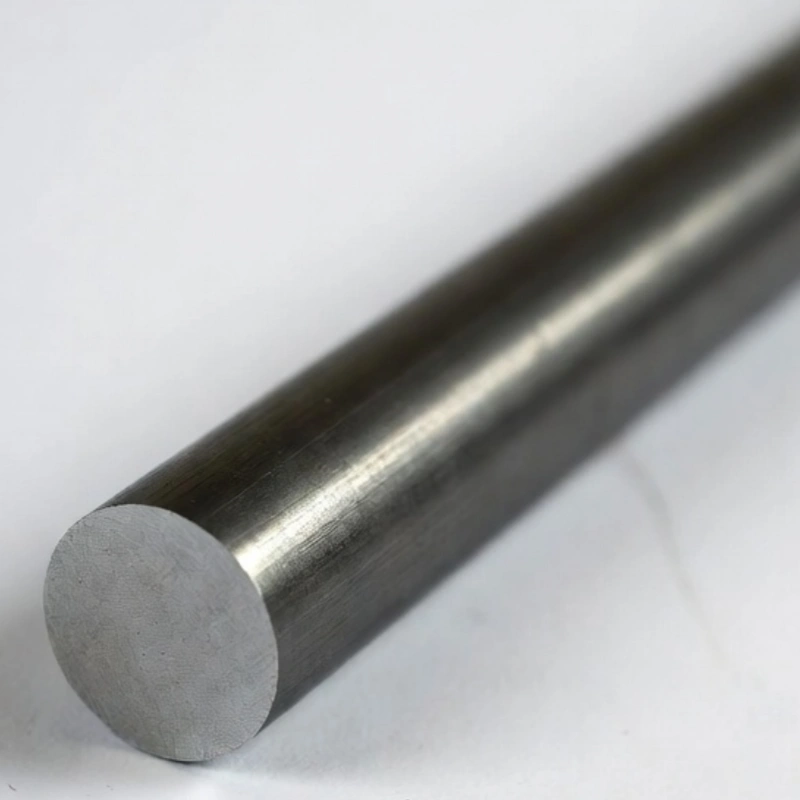
Fushun Metal supplies Maraging 300 Steel as hot-rolled round bars in a broad diameter range. All bars are supplied in the solution annealed condition in compliance with AMS 6521 requirements, with dimensional tolerances to IT h/k 11 for smaller sections and IT h/k 14 for larger sections.
| Diameter Range (mm) | Length Range (m) | Dimensional Tolerance | Surface Condition |
|---|---|---|---|
| 5 – 12.49 | 3.00 – 4.00 | IT h/k 11 | Solution Annealed / Black |
| 12.50 – 55.00 | 3.00 – 4.00 | IT h/k 11 | Solution Annealed / Black |
| 55.01 – 120.00 | 3.00 – 4.00 | IT h/k 11 | Solution Annealed / Black |
| 120.01 – 140.00 | 3.00 – 5.00 | IT h/k 14 | Solution Annealed / Black |
Forged Round Bar and Shaft
For larger cross-sections exceeding the rolled bar range, Fushun Metal produces forged round bars and shafts using our 6,000-ton forging press and radial forging machine. Forging from VIM + VAR ingot delivers excellent internal soundness, homogeneous grain structure, and full compliance with the ultrasonic inspection requirements of AMS 6521. Maximum diameter follows the AMS 6521 limit of 10 inches (254 mm).
| Diameter Range (mm) | Length Range (m) | Dimensional Tolerance | Surface Condition |
|---|---|---|---|
| 140.01 – 203.20 (8 in.) | 3.00 – 5.00 | IT h/k 14 | Solution Annealed / Black or Turned |
| 203.21 – 254.00 (10 in.) | 3.00 – 5.00 | IT h/k 14 | Solution Annealed / Black or Turned |
Forged Flat Bar and Block
| Thickness Range (mm) | Width Range (mm) | Length Range (mm) | Surface Condition |
|---|---|---|---|
| 30 – 300 | 50 – 600 | 200 – 2,000 | Solution Annealed / Black or Milled |
Delivery Condition, Lead Time, and MOQ
| Order Type | MOQ | Typical Lead Time | Notes |
|---|---|---|---|
| Stock sizes (ready inventory) | 1 piece | ~ 7 days | Common diameters held in solution annealed condition |
| Custom rolling / small-batch VIM+VAR | 3 – 5 tons | ~ 30 days | Custom diameter, length, or surface finish |
| Large-batch forging / rolling | Negotiable | 30 – 60 days | Full AMS 6521 certification package included |
Need Maraging 300 Steel for Your Project?
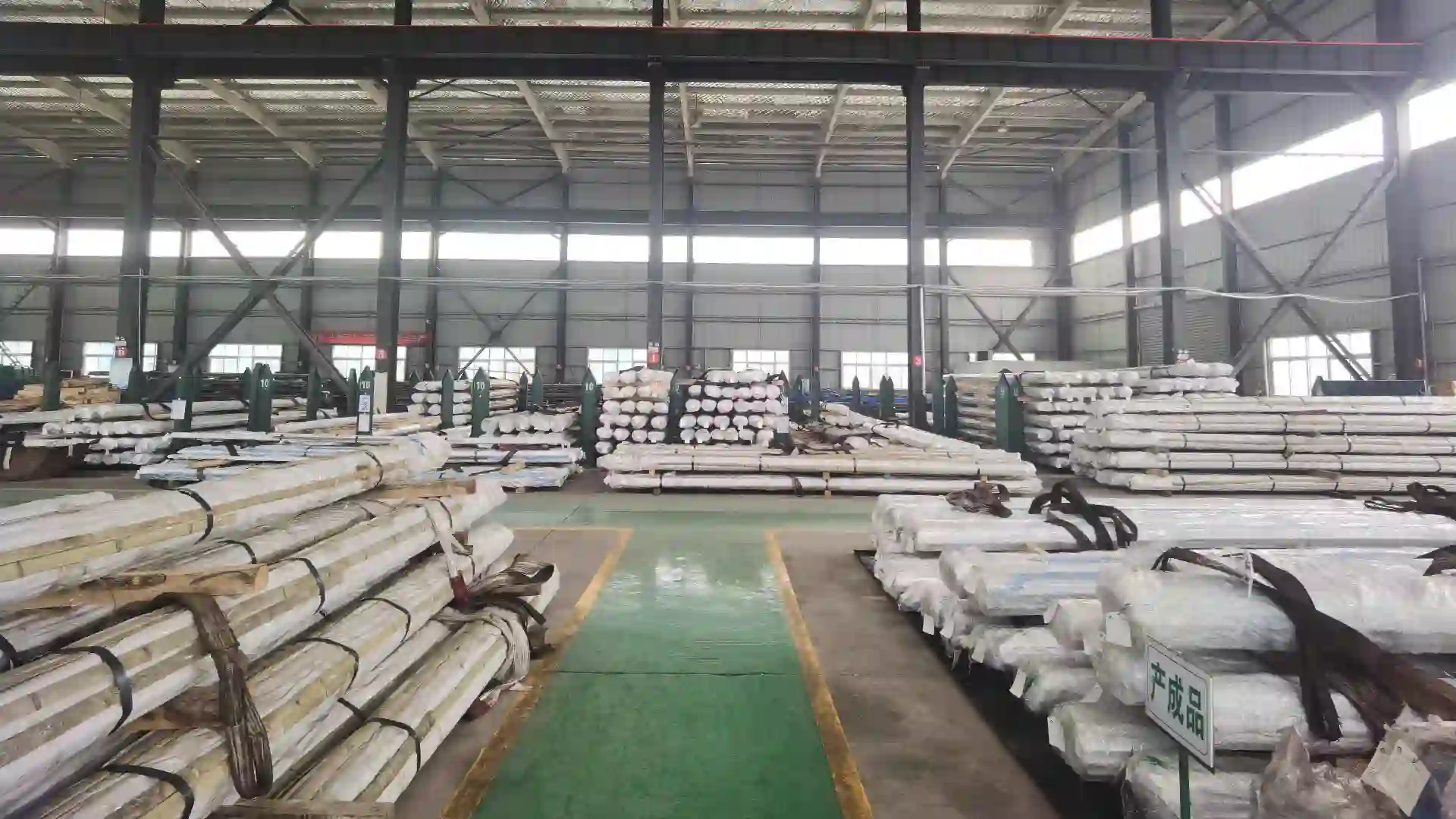
Fushun Metal maintains ready stock in common sizes and can produce custom dimensions to AMS 6521 with full VIM + VAR melting and EN 10204 3.1 certification. Contact our technical team for a fast quotation.
Chemical Composition of Maraging 300 Steel
The composition of Maraging 300 Steel is rigorously controlled to ensure the ultra-low carbon content and precise alloy balance that produce the ductile martensite matrix and dense intermetallic precipitate distribution responsible for its exceptional strength and toughness. The principal compositional distinction from Maraging 250 is the higher cobalt (8.5–9.5%) and titanium (0.50–0.80%) contents. AMS 6521, as an aircraft-quality specification, additionally imposes limits on boron (B), calcium (Ca), and zirconium (Zr) for enhanced melt cleanliness; these elements are not universally controlled in ASTM A538.
| Designation | C | Si | Mn | P | S | Cr | Mo | Ni | Co | Ti | Al | Cu | B | Ca | Zr |
|---|---|---|---|---|---|---|---|---|---|---|---|---|---|---|---|
| AMS 6521 (18Ni300, bar/forgings) |
max 0.03 | max 0.10 | max 0.10 | max 0.010 | max 0.010 | max 0.50 | 4.60 – 5.20 | 18.00 – 19.00 | 8.50 – 9.50 | 0.50 – 0.80 | 0.05 – 0.15 | max 0.50 | max 0.004 | max 0.05 | max 0.02 |
| ASTM A538 Gr. C (18Ni300) |
max 0.03 | max 0.10 | max 0.10 | max 0.010 | max 0.010 | max 0.50 | 4.60 – 5.20 | 18.00 – 19.00 | 8.50 – 9.50 | 0.50 – 0.80 | 0.05 – 0.15 | max 0.50 | — | — | — |
All values in weight percent (wt.%). Highlighted cells (orange) indicate differences between the two standards. AMS 6521 additionally imposes limits on B, Ca, and Zr for aircraft-quality cleanliness. Balance is iron (Fe).
Melting Process and Steel Cleanliness
The reactive alloying elements — particularly titanium, aluminum, and cobalt — combined with the ultra-low carbon requirement and the high-integrity aerospace end-use make open-atmosphere melting entirely unsuitable for Maraging 300 Steel. The required production route per AMS 6521 is double-vacuum melting: Vacuum Induction Melting (VIM) followed by Vacuum Arc Remelting (VAR). VIM provides precise compositional control of the reactive elements and prevents oxidation of titanium and aluminum; VAR subsequently refines the solidification structure, eliminates macro-segregation, minimizes inclusion content, and produces the uniform, dense microstructure required by AMS 6521.
For non-aerospace or developmental applications where full AMS 6521 certification is not required, alternative melting routes involving EAF + LF + VD + ESR can be considered to reduce cost. Fushun Metal works with each customer to select the optimal melting route for their specific application, performance requirements, and budget. Available routes are summarized below:
Mechanical Properties
Maraging 300 Steel is delivered in the solution annealed condition for machining and fabrication. Final mechanical properties are developed by the end-user through the aging heat treatment. The tables below present minimum requirements per AMS 6521 in both the annealed delivery condition and the fully aged condition.
Maraging 300 Steel in Solution Annealed Condition
| Diameter / Section | Hardness (HRC max) | Condition |
|---|---|---|
| All diameters / sections | max 35 HRC | Solution Annealed |
Maraging 300 Steel after Aging Treatment (Precipitation Hardened)
After aging at 480°C (900°F) for a minimum of 3 hours followed by air cooling, the following minimum mechanical properties are required per AMS 6521 at room temperature:
| Condition | Tensile Strength (MPa) | 0.2% Yield Strength (MPa) | Elongation (%, 50.8 mm GL) | Reduction of Area (%) |
|---|---|---|---|---|
| Aged: 480°C / 3 h min, AC | min 1,999 MPa (290 ksi) | min 1,862 MPa (270 ksi) | min 6% | min 25% |
Values are minimum requirements per AMS 6521 at room temperature. Actual test results typically exceed minimums. Specific sampling location and specimen orientation requirements per AMS 6521 apply — consult the standard for full details.
Heat Treatment of Maraging 300 Steel
The heat treatment sequence for Maraging 300 Steel consists of two steps: solution annealing (performed by the mill as the standard delivery condition) and aging (precipitation hardening), typically carried out by the end-user after final machining. Because dimensional change during aging is exceptionally small, it is standard practice to machine components to their final dimensions in the soft annealed condition and then perform the aging treatment on the finished part.
| Process | Temperature | Holding Time | Cooling Method | Purpose |
|---|---|---|---|---|
| Solution Annealing | 820°C ± 14°C (1500°F ± 25°F) |
1 hour minimum per 25 mm of cross-section | Air Cool | Dissolves all precipitates; produces soft, ductile martensitic matrix (max 35 HRC); fully enables machining to final dimensions |
| Aging (Precipitation Hardening) | 480°C ± 8°C (900°F ± 15°F) |
3 hours minimum | Air Cool | Precipitates Ni3Mo, Ni3Ti, and Fe2Mo intermetallics; achieves min 1,999 MPa tensile / 1,862 MPa yield strength; minimal dimensional change |
Surface Finish and Machining Options
In the solution annealed condition (max 35 HRC), Maraging 300 Steel is machinable with conventional carbide tooling, though its work-hardening tendency and low thermal conductivity require careful selection of cutting parameters and tooling geometry. After aging to full hardness (approximately 52–54 HRC), conventional machining becomes impractical; all critical dimensions should therefore be completed before aging. Fushun Metal provides the following surface conditions and precision processing options:
| Product Form | Available Surface Conditions | Achievable Surface Roughness | Dimensional Tolerance |
|---|---|---|---|
| Rolled Round Bar | Black (as-rolled) Turned (peeled) |
Black: Ra ≤ 12.5 μm Turned: Ra ≤ 3.2 μm |
IT h/k 11 (standard) IT h/k 14 (larger sections) |
| Forged Round Bar / Shaft | Black (as-forged) Turned (peeled) |
Black: Ra ≤ 12.5 μm Turned: Ra ≤ 3.2 μm |
IT h/k 14 |
| Forged Flat Bar / Block | Black (as-forged) Milled (faces) |
Black: Ra ≤ 12.5 μm Milled: Ra ≤ 3.2 μm |
IT h/k 14; milled faces ±0.5 mm |
| Precision-Turned Round Bar | CNC Turned + Ground | Ra ≤ 0.8 μm (ground) | h6 / h7 on request |
Custom cutting to exact length, end-facing, and chamfering are available as standard value-added services. Specify required surface condition, tolerance class, and delivery condition (annealed or aged) when placing an inquiry.
Quality Inspection and Testing
Fushun Metal operates under a quality management system certified to ISO 9001. For aerospace-grade Maraging 300 Steel produced to AMS 6521, our quality system additionally aligns with AS9100 requirements. Quality inspection is performed at three defined stages to ensure complete traceability and full specification conformance.
Pre-Production
- Review and approval of customer purchase order, drawing, and applicable AMS 6521 or ASTM A538 requirements
- VIM + VAR ingot incoming chemical composition verification by OES spectrometry against required specification limits
- Melting furnace records, heat number, and ingot traceability assignment before production commencement
In-Process
- Dimensional checks at each production stage: after forging or rolling, after solution annealing, and after any machining operation
- Heat treatment records: solution anneal temperature, soak time, and cooling method logged for every heat-treated lot
- Visual surface inspection for laps, seams, surface cracks, or heat treatment anomalies
Post-Production (Final Inspection)
- Chemical Composition: Final product OES analysis by certified laboratory with full element reporting
- Mechanical Testing: Tensile strength, 0.2% yield strength, elongation, and reduction of area per AMS 6521 sampling requirements on both solution annealed and separately aged test specimens
- Hardness Testing: Rockwell C or Brinell hardness verification on each bar or per-lot basis in the annealed condition; max 35 HRC required
- Ultrasonic Testing (UT): 100% longitudinal UT per ASTM A388 or AMS 6521 UT requirements; acceptance to applicable quality class
- Metallographic Examination: Grain size rating, inclusion content assessment (cleanliness), and macrostructure evaluation on representative lot samples
- Dimensional Inspection: Full dimensional check of diameter, length, straightness, and surface finish against specified tolerances
Standard certification: EN 10204 Type 3.1 Mill Test Certificate (MTC) issued with every shipment as standard. Type 3.2 certification (countersigned by an independent inspection authority) is available on request. Third-party inspection by SGS, TÜV, or any customer-nominated agency can be arranged at the pre-shipment stage.
Packing and Shipping
All Maraging 300 Steel products are packed to ensure arrival at the customer's facility in perfect condition — free from mechanical damage, surface contamination, and corrosion. The packing method is selected according to the surface condition and product form.
Black (As-Rolled / As-Forged) Surface
- Bundled with steel wire or steel strapping in standard bundle weights suitable for container loading
- Anti-rust oil applied uniformly to all exposed surfaces before bundling
- Bundle ends fitted with steel end-caps to prevent transit damage
- Bundles oriented and secured within the container to prevent movement or abrasion during ocean freight
Bright / Turned / Ground Surface
- Each bar individually wrapped in VCI (Vapor Corrosion Inhibitor) plastic film to preserve the machined surface finish
- VCI-wrapped bars further bundled and protected with woven polypropylene sleeve or cloth
- For precision-ground bars and close-tolerance shafts: individual wooden boxes or foam-lined crates to fully protect dimensional integrity and surface roughness from transit shock
- Anti-rust oil applied beneath film wrapping; guaranteed corrosion-free for a minimum of 12 months during ocean transit under normal storage conditions
Shipping and Documentation
- All wooden packaging materials comply with ISPM 15 phytosanitary treatment requirements for international export
- Complete shipping documentation provided with every order: commercial invoice, packing list, certificate of origin, EN 10204 3.1 MTC, UT report, and any additional test certificates required
- Delivery available worldwide by sea freight (FCL or LCL), air freight, or road/rail — we coordinate with major freight forwarders in all principal export ports
Frequently Asked Questions
Can you cut Maraging 300 Steel to my specific length?
What is the hardness of Maraging 300 Steel in the solution annealed condition?
What is the minimum order quantity for Maraging 300 Steel?
How does Maraging 300 Steel differ from Maraging 250 Steel?
Ready to Order Maraging 300 Steel?
Fushun Metal supplies AMS 6521-conforming Maraging 300 Steel bar and forgings produced by VIM + VAR double-vacuum melting, with EN 10204 3.1 certification as standard. Stock available in common sizes. Custom dimensions and large-batch orders are welcome. Contact our technical sales team for a fast, professional response.