
Table of Contents
Steel Softening Annealing: Comprehensive Guide to Microstructure Transformation and Industrial Applications
Understanding Steel Softening Annealing Fundamentals
Definition and Core Purpose
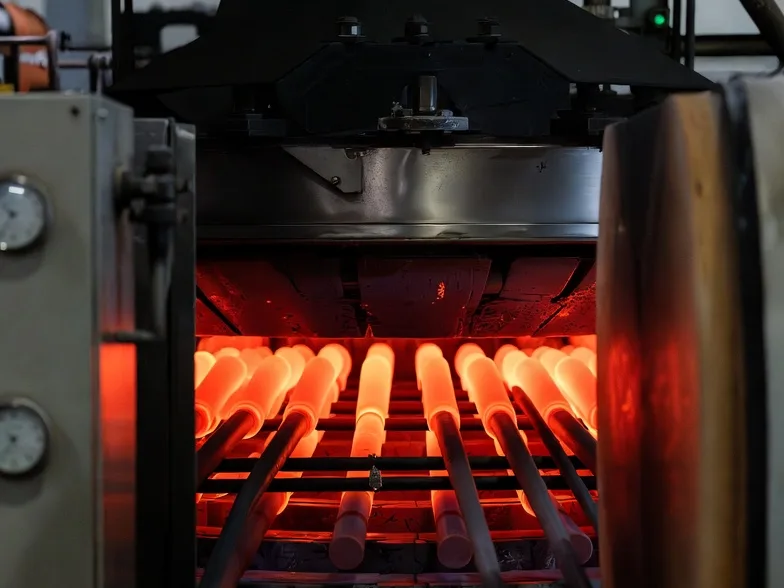
Steel softening annealing, also known as spheroidizing annealing, represents a critical heat treatment process designed to enhance material formability and machinability. The primary objective of this thermal treatment is to transform the microstructural characteristics of steel, specifically converting lamellar cementite structures into spheroidal forms. This transformation significantly improves the steel’s ability to undergo plastic deformation and machining operations while reducing the forces required for these processes.
At FUSHUN SPECIAL STEEL, we recognize that not all materials require design specifications for withstanding extremely high mechanical loads. In many applications, such as bent metal plates with milled grooves, the emphasis shifts from strength to formability and machinability. This paradigm shift becomes particularly crucial in high-volume automated production environments where economic efficiency drives material selection and processing decisions.
Industrial Significance and Economic Impact
The economic implications of softening annealing extend far beyond the immediate heat treatment costs. By optimizing steel microstructures for specific applications, manufacturers can achieve substantial reductions in forming forces, extended tool life, and improved surface finishes. These benefits translate directly into reduced production costs, increased throughput, and enhanced product quality across various industrial sectors.
Modern manufacturing environments demand materials that can undergo complex forming operations while maintaining dimensional accuracy and surface integrity. Softening annealing addresses these requirements by creating microstructures that facilitate easier material flow during deformation processes. This capability becomes particularly valuable in automotive, aerospace, and precision manufacturing applications where component complexity continues to increase.
Microstructural Transformation Mechanisms
Critical Temperature Ranges and Thermal Cycles
The softening annealing process requires precise temperature control to achieve optimal microstructural transformations. For hypoeutectoid steels, the heating temperature is carefully maintained just below the PS line (approximately 727°C), ensuring that existing cementite particles do not undergo dissolution. This temperature range allows sufficient thermal energy for diffusion processes while preserving the carbide phase that will undergo spheroidization.
| Steel Type | Temperature Range (°C) | Holding Time (hours) | Cooling Rate (°C/h) |
|---|---|---|---|
| Hypoeutectoid Steel | 680-720 | 4-8 | 10-20 |
| Hypereutectoid Steel | 740-760 | 6-12 | 5-15 |
| Tool Steel | 700-750 | 8-16 | 8-12 |
Cementite Morphology Transformation
The fundamental mechanism underlying softening annealing involves the transformation of lamellar cementite into spheroidal forms through thermodynamically driven diffusion processes. During the annealing cycle, the high interfacial energy associated with the extensive cementite-ferrite boundaries in pearlitic structures drives the system toward a more stable configuration. The lamellar cementite gradually dissolves and precipitates in spheroidal forms to minimize total interfacial energy.
This morphological transformation occurs through several distinct stages. Initially, the lamellar cementite begins to fragment at points of high curvature and stress concentration. Subsequently, these fragments undergo Ostwald ripening, where smaller particles dissolve and larger ones grow to reduce overall surface energy. The final stage involves the formation of discrete spheroidal cementite particles distributed throughout the ferrite matrix.
The kinetics of this transformation depend critically on temperature, time, and initial microstructure. Higher temperatures accelerate diffusion rates but must be carefully controlled to prevent cementite dissolution. Extended holding times promote more complete spheroidization but increase energy costs and processing time. The initial microstructure, particularly the fineness of the pearlitic structure, significantly influences the transformation rate and final particle distribution.
Advanced Process Parameters and Optimization
Heating Cycle Design and Implementation
Optimal heating cycles for softening annealing require careful consideration of thermal gradients, heating rates, and temperature uniformity throughout the steel cross-section. Rapid heating can create thermal stresses that may lead to distortion or cracking, particularly in complex geometries or thick sections. Conversely, extremely slow heating rates may result in incomplete austenitization or prolonged processing times that impact economic efficiency.
For hypereutectoid steels, the heating strategy differs significantly from hypoeutectoid compositions. These materials are heated to temperatures slightly above or oscillating around the PSK line, allowing for partial dissolution of excess carbides while maintaining sufficient carbide volume for subsequent spheroidization. This approach requires precise temperature control and monitoring to achieve optimal results without compromising the desired microstructural characteristics.
Controlled Cooling Strategies
The cooling phase of softening annealing plays a crucial role in determining final microstructural characteristics and mechanical properties. Furnace cooling or controlled cooling rates typically ranging from 5-20°C per hour ensure adequate time for cementite spheroidization while preventing the formation of undesirable phases such as bainite or martensite. The specific cooling rate must be optimized based on steel composition, section thickness, and desired final properties.
Alternative cooling methods, including isothermal annealing, can provide enhanced control over microstructural development. In isothermal processes, the steel is rapidly cooled to a predetermined temperature within the spheroidization range and held for extended periods. This approach can achieve more uniform spheroidization and better control over final carbide size distribution compared to continuous cooling methods.
Pre-treatment Considerations
Enhanced softening annealing results can be achieved through strategic pre-treatment processes. Quenching steel prior to softening annealing creates a fine martensitic structure that transforms into a uniform distribution of fine spheroidal cementite particles during subsequent annealing. This approach is particularly beneficial for tool steels and high-carbon applications where maximum formability is required.
Industrial Applications and Manufacturing Benefits
Tool Steel Processing Applications
In tool steel manufacturing, softening annealing serves multiple critical functions beyond simple softness enhancement. The spheroidized microstructure facilitates complex machining operations required for precision tooling applications while reducing tool wear and improving surface finish quality. This becomes particularly important in the production of dies, molds, and precision cutting tools where dimensional accuracy and surface integrity are paramount.
The enhanced machinability resulting from spheroidized cementite structures translates into significant economic benefits for tool manufacturers. Reduced cutting forces allow for higher machining speeds and feeds, while extended tool life decreases replacement costs and downtime. Additionally, the improved chip formation characteristics associated with spheroidal carbides result in better surface finishes and reduced secondary finishing operations.
Manufacturing Process Benefits
The implementation of softening annealing in manufacturing processes yields substantial benefits across multiple operational parameters. Forming operations such as deep drawing, bending, and rolling require significantly reduced forces when applied to spheroidized structures. This force reduction enables the use of smaller, more energy-efficient equipment while simultaneously improving dimensional accuracy and reducing springback effects.
FUSHUN SPECIAL STEEL’s extensive experience in alloy structural steel processing demonstrates that proper softening annealing can reduce forming loads by 20-40% compared to non-annealed conditions. This reduction becomes increasingly important in high-volume production environments where energy consumption and equipment wear directly impact profitability.
| Application | Force Reduction (%) | Tool Life Improvement | Surface Finish Enhancement |
|---|---|---|---|
| Deep Drawing | 25-35 | 150-200% | Significant |
| Precision Machining | 30-45 | 200-300% | Excellent |
| Cold Forming | 20-30 | 100-150% | Good |
Microstructural Analysis and Characterization
Dislocation Movement and Mechanical Properties
The transformation from lamellar to spheroidal cementite fundamentally alters the dislocation behavior within the steel matrix, resulting in dramatically improved formability characteristics. In pearlitic structures, the continuous lamellar cementite plates extend across entire grain boundaries, creating significant barriers to dislocation movement. These barriers require substantial stress concentrations to overcome, resulting in higher yield strengths but limited plastic deformation capability.
Spheroidal cementite particles, conversely, present discrete obstacles that dislocations can bypass through various mechanisms including bowing, cross-slip, and climb. The discontinuous nature of spheroidal carbides allows dislocations to find alternative paths around obstacles, facilitating easier plastic flow and reducing the stress required for deformation. This fundamental difference in dislocation-carbide interaction explains the substantial improvement in formability observed after spheroidizing annealing.
Grain Structure Evolution and Optimization
The grain structure evolution during softening annealing significantly influences final mechanical properties and processing characteristics. Properly controlled annealing cycles can achieve optimal grain sizes that balance formability with subsequent hardening response. Excessive grain growth during annealing can lead to reduced strength after final heat treatment, while insufficient grain development may limit formability improvements.
Advanced microstructural control techniques employed by FUSHUN SPECIAL STEEL include careful selection of annealing atmospheres, precise temperature cycling, and strategic alloying element management. These approaches enable the achievement of uniform grain structures with optimal carbide distributions for specific application requirements. The resulting microstructures exhibit excellent balance between immediate processing benefits and final property development potential.
Quality Control and Process Monitoring
Advanced Testing and Characterization Methods
Comprehensive quality control in softening annealing operations requires sophisticated testing and characterization methods to ensure consistent results and optimal processing outcomes. Metallographic examination serves as the primary tool for evaluating spheroidization progress, carbide size distribution, and overall microstructural uniformity. Modern image analysis systems enable quantitative assessment of spheroidization percentage, average particle size, and spatial distribution parameters.
Hardness testing provides rapid feedback on annealing effectiveness and process consistency. Rockwell, Brinell, and Vickers hardness measurements can identify variations in spheroidization completion and guide process parameter adjustments. Additionally, microhardness testing allows detailed evaluation of matrix properties and carbide-matrix interface characteristics, providing insights into local deformation behavior and processing optimization opportunities.
Continuous Process Optimization Strategies
Modern softening annealing operations benefit significantly from advanced process monitoring and control systems that enable real-time optimization and quality assurance. Temperature profiling throughout furnace zones ensures uniform heating and prevents local overheating or insufficient temperature conditions that could compromise spheroidization results. Atmosphere control systems maintain optimal chemical environments that prevent oxidation and decarburization while promoting desired microstructural transformations.
Statistical process control methodologies provide frameworks for identifying trends, controlling variations, and implementing continuous improvements in softening annealing operations. By monitoring key process variables and correlating them with metallurgical outcomes, manufacturers can establish robust operating windows that consistently deliver desired properties while minimizing energy consumption and processing time.
Advanced Applications and Emerging Technologies
Automotive Industry Applications
The automotive industry represents one of the largest consumers of softening annealed steels, particularly for components requiring complex forming operations and precise dimensional control. Engine components such as valve springs, transmission parts, and suspension elements benefit significantly from the enhanced formability and machinability provided by spheroidized microstructures. The ability to achieve complex geometries with reduced forming forces enables lighter, more efficient component designs that contribute to overall vehicle performance and fuel economy improvements.
Modern automotive manufacturing processes increasingly demand materials that can undergo multiple forming operations while maintaining structural integrity and dimensional accuracy. High-speed steel components processed through softening annealing demonstrate superior performance in progressive die operations, enabling the production of complex stampings with minimal springback and excellent surface quality.
Precision Manufacturing and Micro-forming
The emergence of micro-manufacturing technologies has created new demands for materials with exceptional formability at extremely small scales. Softening annealing enables the production of micro-components with feature sizes in the micrometer range while maintaining structural integrity and functional performance. The reduced forming forces associated with spheroidized structures become critically important in micro-forming operations where traditional force scaling relationships may not apply.
Precision manufacturing applications in electronics, medical devices, and optical systems require materials that can achieve extremely tight tolerances while maintaining excellent surface finishes. The enhanced machinability provided by spheroidized carbide structures enables the achievement of nanometer-level surface roughness values that are essential for advanced technological applications.
Future Technology Integration
Emerging technologies such as additive manufacturing and advanced forming processes are creating new opportunities for softening annealed materials. The unique microstructural characteristics achieved through spheroidizing treatments can enhance powder flowability in metal injection molding and improve layer adhesion in selective laser melting processes, expanding the application range for these advanced manufacturing technologies.
Material Selection and Composition Considerations
Carbon Content Effects on Spheroidization
Carbon content plays a fundamental role in determining spheroidization behavior and the effectiveness of softening annealing treatments. Steels with carbon contents below 0.3% typically do not require spheroidizing annealing because their naturally low hardness already provides adequate formability for most applications. However, these low-carbon steels may present machining challenges due to increased tendency for built-up edge formation on cutting tools, which can be addressed through alternative heat treatment strategies.
Medium and high-carbon steels, particularly those in the 0.4-1.2% carbon range, demonstrate the most significant benefits from spheroidizing annealing. The substantial carbide volume fraction in these compositions provides ample opportunity for microstructural optimization through spheroidization. The transformation from continuous carbide networks to discrete spheroidal particles results in dramatic improvements in both formability and machinability, making these materials ideal candidates for softening annealing treatments.
Alloying Element Influence on Processing
The presence of various alloying elements significantly influences spheroidization kinetics and optimal processing parameters for softening annealing operations. Chromium, molybdenum, and tungsten tend to stabilize carbide structures and may require extended annealing times or higher temperatures to achieve complete spheroidization. These elements can form complex carbides that resist dissolution and transformation, necessitating careful process optimization to achieve desired microstructural characteristics.
Conversely, elements such as silicon and manganese can accelerate spheroidization processes by promoting carbide instability and enhancing diffusion rates. Understanding these alloying effects enables optimization of annealing cycles for specific steel compositions, ensuring efficient processing while achieving optimal final properties. FUSHUN SPECIAL STEEL’s expertise in nickel-based alloys demonstrates the importance of composition-specific processing optimization for achieving consistent results across diverse material systems.
Environmental Considerations and Sustainability
Energy Efficiency and Resource Conservation
Modern softening annealing operations must balance metallurgical requirements with environmental sustainability considerations. Energy consumption represents a significant portion of total processing costs, making efficiency improvements both economically and environmentally beneficial. Advanced furnace designs incorporating recuperative heating systems, improved insulation, and optimized heating profiles can reduce energy consumption by 20-30% compared to conventional systems while maintaining or improving metallurgical results.
The implementation of predictive modeling and advanced process control systems enables optimization of heating cycles to minimize energy consumption while ensuring complete spheroidization. These technologies can identify optimal processing windows that balance cycle time, energy consumption, and metallurgical outcomes, resulting in more sustainable manufacturing operations without compromising product quality.
Waste Reduction and Material Efficiency
Softening annealing contributes to overall sustainability through improved material utilization and reduced waste generation. The enhanced formability provided by spheroidized structures enables more aggressive forming operations with reduced scrap rates and improved material yield. Additionally, the extended tool life associated with machining spheroidized materials reduces tool consumption and waste generation in downstream processing operations.
The ability to achieve complex geometries with reduced forming forces also enables the use of thinner material sections while maintaining structural integrity, contributing to overall material conservation. These benefits become particularly significant in high-volume production applications where small improvements in material efficiency can result in substantial resource conservation over time.
Conclusion and Future Developments
Steel softening annealing represents a critical technology for optimizing material properties and manufacturing efficiency across diverse industrial applications. The fundamental transformation from lamellar to spheroidal cementite structures provides substantial benefits in formability, machinability, and processing economics that continue to drive adoption across various manufacturing sectors. As FUSHUN SPECIAL STEEL continues to advance heat treatment technologies and expand our understanding of microstructure-property relationships, the applications and benefits of softening annealing will undoubtedly continue to grow.
Future developments in softening annealing technology will likely focus on accelerated processing methods, improved energy efficiency, and enhanced property control through advanced microstructural engineering. The integration of artificial intelligence and machine learning technologies promises to enable more precise process optimization and predictive quality control, further enhancing the economic and environmental benefits of these essential heat treatment operations.
The continued evolution of manufacturing technologies and increasing demands for sustainable production methods ensure that softening annealing will remain a vital process for achieving optimal balance between material properties, processing efficiency, and environmental responsibility in steel production and processing operations.
FUSHUN SPECIAL STEEL Co., Ltd.
Professional Manufacturer of Special Steel, Tool Steel, and Heat Treatment Services
Email: [email protected] | Phone: +86-731-89903933
Specialized in Import and Export of Tool Steel, High Speed Steel, Alloy Structural Steel, and Nickel-Based Alloy