
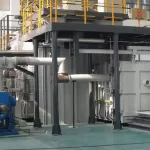
Achieving proper VIM inclusion control is arguably the most critical step in superalloy manufacturing. When we melt complex nickel-based alloys, the primary melting stage sets the baseline for material cleanliness. If you get it wrong in the vacuum induction melting (VIM) furnace, downstream processes like electroslag remelting (ESR) or vacuum arc remelting (VAR) will struggle to fix the mess. Therefore, understanding the exact mechanisms of inclusion formation is essential for any metallurgist.
GH4169 vs. UNS N07718: Grade Equivalents
Before diving into the metallurgy, we must clarify the material designations. The Chinese standard GB/T 14992 refers to this workhorse superalloy as GH4169. However, in the global market, it is universally recognized by its American designation.
The direct equivalent is UNS N07718 (GB/T GH4169 / EN 2.4668). You will also frequently see it listed under ASTM B637 or simply called Alloy 718. Meanwhile, the Japanese standard designates it as JIS NCF 718. While these grades are functionally identical in their core alloying philosophy, real-world interchangeability requires careful attention to specific certification limits.
For example, the GB/T GH4169 specification sometimes allows slightly different trace element caps compared to the strict aerospace requirements of AMS 5662 (which governs UNS N07718). Consequently, a receiving inspector at an aerospace fabricator will absolutely flag a generic GH4169 cert if the purchase order explicitly demands ASTM or AMS compliance. You cannot simply cross out one name and write the other on a test report.
| Standard | Grade Name | Ni (%) | Cr (%) | Nb + Ta (%) | Mo (%) |
|---|---|---|---|---|---|
| USA (ASTM/UNS) | UNS N07718 | 50.0 – 55.0 | 17.0 – 21.0 | 4.75 – 5.50 | 2.80 – 3.30 |
| China (GB/T) | GH4169 | 50.0 – 55.0 | 17.0 – 21.0 | 4.75 – 5.50 | 2.80 – 3.30 |
| Europe (EN) | 2.4668 | 50.0 – 55.0 | 17.0 – 21.0 | 4.75 – 5.50 | 2.80 – 3.30 |
From this point forward, we will refer to this material by its primary American designation, UNS N07718. Now, let us examine how melting practices dictate the final quality of this alloy.
The Core Challenge of VIM Inclusion Control
UNS N07718 relies on precipitation hardening to maintain its strength up to 650°C. Because it is heavily alloyed with reactive elements like aluminum and titanium, it is highly susceptible to oxygen and nitrogen contamination. This is a common issue, it happens in almost every mill. When these elements react during melting, they form non-metallic inclusions.
Specifically, we see two main categories of inclusions in the as-cast VIM ingots. First, there are oxide inclusions, primarily consisting of Al2O3, MgAl2O4, and MgO. Second, we encounter titanium-based inclusions, such as Ti(C,N) and TiS. Both types pose severe risks to the mechanical integrity of the final forged component.
Al2O3 inclusions are particularly troublesome. They possess a high melting point and a low density. As a result, they tend to segregate into the remaining liquid during the final stages of solidification. This localized concentration leads directly to micro-shrinkage porosity and, eventually, forging cracks.
The Danger of Composite Inclusions
Furthermore, the precipitation sequence in UNS N07718 creates complex, multi-layered defects. Titanium carbonitrides, Ti(C,N), rarely form in isolation. Instead, they use existing oxide particles, like MgAl2O4 spinels, as nucleation sites. This heterogeneous nucleation significantly lowers the undercooling required for Ti(C,N) to precipitate.
We often observe a core of MgAl2O4 surrounded by a thick shell of Ti(C,N). Later in the solidification process, niobium carbides (NbC) will nucleate on the outside of the Ti(C,N) shell. Consequently, you end up with massive, three-layer composite inclusions. These massive clusters pin grain boundaries, restrict grain growth during annealing, and act as primary initiation sites for fatigue failure.
Crucible Erosion: The Hidden Source of Al2O3
To implement effective VIM inclusion control, we must identify where the oxygen originates. While raw materials carry some oxygen, a massive influx often comes directly from the furnace lining itself. Most industrial VIM furnaces utilize magnesia (MgO) crucibles for melting nickel-based superalloys.
During the refining period, the molten UNS N07718 is held under a deep vacuum. At this stage, the highly reactive aluminum dissolved in the melt begins to attack the MgO crucible walls. This is not a mechanical erosion; it is a pure thermodynamic reduction reaction.
“The cleanliness of a VIM ingot is inversely proportional to the time the reactive melt spends fighting its own containment vessel.”
Thermodynamics of MgO Breakdown
The chemical mechanism is straightforward but devastating to melt purity. The dissolved aluminum reduces the magnesia, producing dissolved magnesium and solid alumina. We can express this reaction as:
3MgO(s) + 2[Al] → Al2O3(s) + 3[Mg]
Initially, this newly formed Al2O3 adheres to the inner wall of the crucible. However, the induction coils generate intense electromagnetic stirring within the liquid metal. This continuous stirring physically rips the Al2O3 particles away from the wall and sweeps them directly into the bulk alloy.
Simultaneously, some of the Al2O3 that remains on the crucible wall reacts further with the underlying MgO. This secondary reaction generates MgAl2O4 (spinel). Eventually, these spinels also spall off into the melt. Therefore, the crucible acts as a continuous inclusion generator if the process parameters are not strictly managed.
Optimizing Temperature for VIM Inclusion Control
So, how do we stop this crucible degradation? The answer lies in strict thermal management. The reduction of MgO by aluminum is highly temperature-dependent. As the melt temperature increases, the thermodynamic driving force for the reaction shifts aggressively to the right.
In our experience, many operators mistakenly believe that a hotter melt is a cleaner melt. They assume that higher temperatures will lower the viscosity of the liquid UNS N07718, allowing inclusions to float to the surface faster. While the physics of flotation are correct, the chemistry works against them. The hotter you get, the faster you generate new inclusions.
Finding the Refining Sweet Spot
Extensive shop-floor trials have proven this dynamic. Consider a scenario where we test three different refining temperatures: 1530°C, 1560°C, and 1590°C. The testing of the samples were completed quickly. The results are always striking.
- High Temperature (1590°C): Even with a short refining time of 90 minutes, the inclusion density skyrockets. The crucible erosion is severe, flooding the melt with fresh Al2O3.
- Medium Temperature (1560°C): Extending the time to 145 minutes slightly improves degassing, but the inclusion density only drops by about 15% compared to the high-temperature baseline.
- Low Temperature (1530°C): Holding the melt at 1530°C for 140 minutes yields massive improvements. The inclusion density plummets by nearly 60%. The lower thermal energy effectively suppresses the aluminum-magnesia reaction.
Therefore, the golden rule for VIM inclusion control in UNS N07718 is to refine at the lowest practical temperature. We recommend a tight window of 1525°C to 1535°C. Combine this with a moderate vacuum level (≤1.0 Pa) and a refining duration of 90 to 150 minutes. This balance provides adequate time for nitrogen removal without giving the crucible time to dissolve.
Raw Material Purity and VIM Inclusion Control
Even with perfect temperature control, you cannot make clean steel from dirty ingredients. The initial oxygen and nitrogen load brought in by the raw materials dictates the baseline inclusion volume. In UNS N07718, the purity of the reactive alloying additions—specifically chromium, niobium, and titanium—is paramount.
Standard commercial-grade ferroalloys or lower-tier pure metals often contain high levels of dissolved gases. When these melt, they instantly release oxygen and nitrogen into the liquid pool. Because aluminum and titanium are already present, they immediately react with these freed gases to form Al2O3 and TiN before the vacuum system can pull the gases away.
The Impact of Trace Oxygen and Nitrogen
Let us look at a practical comparison. Suppose we run two identical low-temperature VIM heats. In the first heat, we use standard chromium containing 600 ppm oxygen and 270 ppm nitrogen. We also use standard niobium and titanium. The resulting ingot will still show a significant population of Ti(C,N) and scattered Al2O3.
In the second heat, we upgrade to high-purity raw materials. We use chromium with only 38 ppm oxygen and 16 ppm nitrogen. We similarly upgrade the niobium and titanium stocks. The difference in the final microstructure is profound. Automated SEM analysis (such as ASPEX) typically reveals an overall inclusion density reduction of over 30%.
More importantly, the specific volume of Al2O3 drops to near zero. By starving the melt of initial oxygen, we prevent the early formation of oxides. Without those oxide cores, the subsequent precipitation of Ti(C,N) is delayed, resulting in fewer, smaller, and less harmful carbonitride clusters.
Practical Takeaways for Mill Operators
Mastering VIM inclusion control is not about finding a magic flux or a secret additive. It requires strict discipline regarding thermodynamics and supply chain quality. If you want to produce aerospace-grade UNS N07718, you must respect the chemistry happening inside the crucible.
- Temperature Discipline
- Never exceed 1535°C during the refining hold. Higher temperatures do not clean the melt; they destroy the MgO lining and generate fresh alumina.
- Time Management
- Keep the refining period between 90 and 150 minutes. Shorter times leave nitrogen behind. Longer times allow excessive crucible erosion.
- Input Quality
- Audit your raw material suppliers. Spending extra on low-oxygen chromium and niobium pays off exponentially by reducing scrap rates at the forging press.
Ultimately, the primary melt dictates the ceiling for your material’s performance. By controlling the temperature and the inputs, you control the microstructure. If you are dealing with challenging inclusion limits or need guidance on material specifications, feel free to reach out to our technical team. For a broader understanding of the physics behind the melting equipment, you can review the principles of vacuum induction melting.