
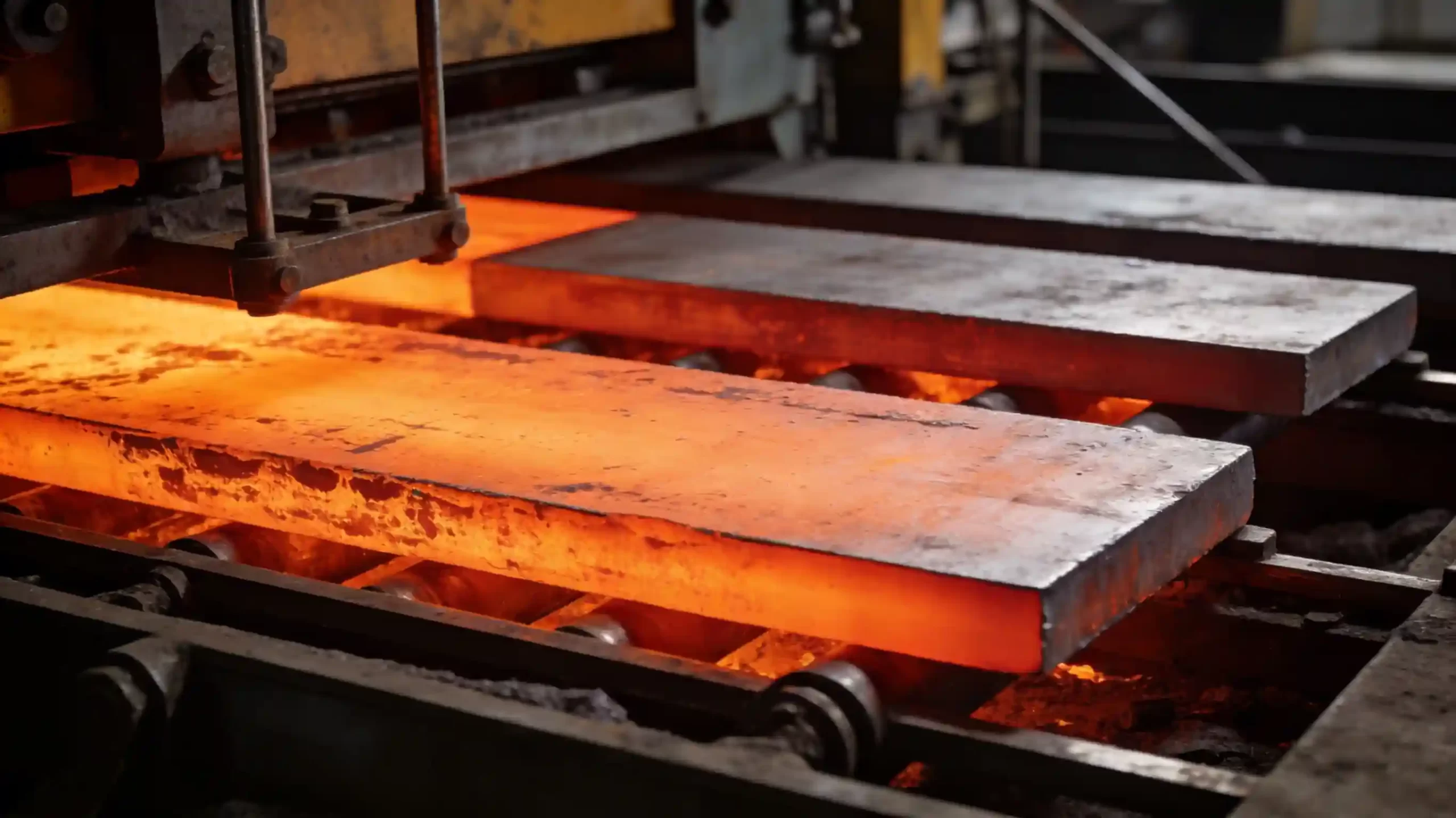
Welding and Heat Treatment of 9Cr1Mo and 12Cr1MoV Steel
A Comprehensive Technical Guide for Dissimilar Steel Joint Applications
Table of Contents
- Introduction
- Background and Material Specifications
- Welding Process and Parameters
- Mechanical Properties of Welded Joints
- Heat Treatment Considerations
- Carbon Migration and Soft Zone Formation
- Residual Stress Analysis
- Cold Cracking Sensitivity
- Conclusions and Recommendations
- Frequently Asked Questions
1. Introduction
As power plant boilers continue to evolve toward higher capacities and operating parameters, the research on high-strength metallic materials has advanced significantly. In superheater tube systems, martensitic-grade heat-resistant steels have become increasingly popular internationally as replacements for traditional pearlitic-grade steels.
The introduction of these advanced materials into existing power plant infrastructure creates a critical challenge: how to successfully weld dissimilar steel joints between pearlitic and martensitic grades while maintaining optimal mechanical properties and long-term service reliability.
“When replacing tube sections in power plants, the connection between new martensitic steel tubes and existing pearlitic steel tubes requires careful consideration of welding procedures and heat treatment protocols.”
2. Background and Material Specifications
This technical guide presents findings from welding experiments conducted on screen-type superheater tubes in a 410 T/H high-pressure boiler system. The study focused on dissimilar steel welding between 9Cr1Mo (designated as Pg class) and 12Cr1MoV steels.
Material Specifications
| Parameter | Specification |
|---|---|
| Materials | 9Cr1Mo (Pg class) and 12Cr1MoV |
| Tube Dimensions | Φ38 × 4.5 mm |
| 9Cr1Mo Supply Condition | Tempered sorbite with martensitic orientation + small amount of ferrite |
| 12Cr1MoV Structure | Lamellar pearlite + ferrite |
| Alloy Content Difference | Approximately 8% at fusion line |
According to the Schaeffler diagram analysis, dilution ratios between 21-93% result in fully martensitic structures, with only a narrow zone near the 12Cr1MoV side showing ferrite plus a small amount of martensite.
3. Welding Process and Parameters
The experimental welding procedure employed manual tungsten inert gas (TIG) welding without filler wire for the root pass, which comprised approximately 1/4 of the wall thickness. The second layer cap pass utilized H08CrMoV filler wire.
Key Process Parameters
- Tungsten electrode diameter: 1.6–2.0 mm
- Welding current: Approximately 80 A
- Preheat requirement: None (due to thin wall thickness)
- Post-weld heat treatment: None performed
- Welding sequence: Continuous root and cap passes
Technical Note: The concentrated heat input characteristic of TIG welding results in a small heat-affected zone, which helps prevent excessive hardening in the joint.
4. Mechanical Properties of Welded Joints
Despite the presence of hardened structures in the heat-affected zone (HAZ), the welded joints without preheat or post-weld heat treatment achieved room temperature mechanical properties that met all specification requirements.
Room Temperature Mechanical Properties
| Material/Condition | σb (kg/mm²) | σs (kg/mm²) | δ5 (%) |
|---|---|---|---|
| 12Cr1MoV Pipe (Φ38×4.5mm) | ≥49 | ≥25.5 | ≥20 |
| Pg + 12Cr1MoV Joint (No PWHT) | Meeting specification | Meeting specification | Meeting specification |
Impact Toughness Results (Without PWHT)
| Sample Batch | Weld Center (kg·m/cm²) | Pg Side HAZ (kg·m/cm²) | 12Cr1MoV Side HAZ (kg·m/cm²) |
|---|---|---|---|
| Batch I | 5.3 | 8.06 | 9.06 |
| Batch II | 4.87 | 8.14 | 10.51 |
| Batch III | 4.90 | 8.52 | 10.68 |
| Average | 5.05 | 8.24 | 10.08 |
Metallographic examination revealed that no extensive coarse martensite structure was observed in any region of the joint without heat treatment. Both the Pg side HAZ and the fusion line vicinity exhibited sorbite structure with varying degrees of martensitic orientation, explaining the satisfactory comprehensive mechanical properties achieved.
5. Heat Treatment Considerations
The selection of appropriate post-weld heat treatment (PWHT) parameters for dissimilar 9Cr1Mo and 12Cr1MoV joints presents significant challenges due to the conflicting requirements of the two materials.
Standard PWHT Parameters
- Pg class steel: 740–760°C tempering temperature
- Holding time: 40–60 minutes (based on CCT curve)
- 12Cr1MoV requirements: Different temperature parameters
“When the Pg and 12Cr1MoV dissimilar joint is heat treated according to Pg parameters, all tensile specimens fracture in the 12Cr1MoV base metal region approximately 12-15mm from the fusion line, with tensile strength 4.7-11% lower than the original supply condition.”
The fundamental problem is that heat treatment suitable for one material adversely affects the other. Treating at 760°C with parameters appropriate for 9Cr1Mo steel causes detrimental changes in the 12Cr1MoV structure, while treating to 12Cr1MoV specifications leaves the 9Cr1Mo side with unsatisfactory microstructure.
6. Carbon Migration and Soft Zone Formation
In Pg and 12Cr1MoV dissimilar steel joints, the approximately 8% difference in alloy content at the fusion line creates conditions favorable for carbon migration from the weld toward the near-fusion zone on the Pg side.
Types of Soft Zones
Type I Soft Zone
Located at the boundary between root pass and cap pass welds, and at the fusion zone between cap pass and Pg side. Caused by carbon migration creating a decarburized layer.
Type II Soft Zone
Located in the 12Cr1MoV base metal approximately 12-15mm from the fusion line. Caused by pearlite spheroidization during inappropriate heat treatment.
After 760°C heat treatment, the original lamellar pearlite structure of 12Cr1MoV becomes difficult to observe, with carbides aggregating as spherical particles on the ferrite matrix and at grain boundaries. Extended isothermal holding times increase the degree of pearlite spheroidization and corresponding hardness reduction.
Key Finding: Both soft zones can reduce the creep rupture resistance of joints during long-term service, particularly under conditions of temperature and pressure fluctuation, making them unsafe for screen-type superheater tube operation.
7. Residual Stress Analysis
Field measurements of residual stress were conducted on Pg and 12Cr1MoV dissimilar joints in actual assembly conditions using electrical resistance strain gauges oriented in both axial and circumferential directions.
Measured Residual Stress Values
| Location/Direction | Stress Value (kg/mm²) |
|---|---|
| Maximum axial tensile stress (Pg HAZ) | 11.66 |
| 12Cr1MoV side and other directions | 1.70–2.19 |
| Maximum circumferential stress (Pg HAZ) | 2.19 |
| Design working stress | 5.42 |
| Combined circumferential stress | 7.61 |
| 12Cr1MoV allowable stress | 7.85 |
The combined working stress plus residual stress remains below the allowable stress limits for both materials, confirming safe operation. Furthermore, during extended high-temperature service, welding residual stresses will undergo additional relaxation.
Thermal Aging Effects on Hardness
The screen-type superheater tubes operate at temperatures of 465–534°C, which provides beneficial tempering effects on any hardened zones. Thermal aging studies at 550°C demonstrated:
- Hardness in Pg HAZ decreased by 19–20% after 24 hours
- Continued decrease after 60 hours to stable values
- Total hardness reduction of 34–36.5% at equilibrium
8. Cold Cracking Sensitivity
To evaluate the joint’s susceptibility to cold cracking, specimens were examined under various delayed conditions using both macroscopic and microscopic inspection methods. No delayed cracking was detected in any specimen.
Low-Temperature Aging Tests
To create favorable conditions for hydrogen diffusion and accumulation, post-weld low-temperature aging tests were conducted:
- Non-heat-treated joints aged at -23°C for 60 hours
- Non-heat-treated joints aged at -25°C for 60 hours
- Metallographic examination revealed no cracking in either condition
Hydrogen Control: When weld metal hydrogen content is minimized (as achieved with TIG welding and proper filler wire cleaning), hydrogen diffusion from weld to HAZ is greatly reduced. Consequently, hydrogen accumulation and partial pressure remain at low levels, preventing crack formation even without post-weld hydrogen release treatment.
For shielded metal arc welding (SMAW), specifications require immediate 400°C tempering after welding for hydrogen release. However, for TIG welding with strict cleaning of rust, oil, and contaminants from filler wire, achieving very low hydrogen levels makes post-weld treatment unnecessary.
9. Conclusions and Recommendations
Based on comprehensive experimental findings, the following conclusions and recommendations apply to welding dissimilar 9Cr1Mo (Pg) and 12Cr1MoV steel superheater tubes:
Key Conclusions
- Pearlitic + martensitic dissimilar steel joints can be successfully welded using manual TIG welding with multi-pass technique.
- Strict attention to filler wire and groove cleaning before welding is essential.
- Post-weld heat treatment can be safely omitted when proper welding procedures are followed.
- Immediate commissioning after welding is acceptable for design operating conditions.
- Eliminating heat treatment saves significant labor, resources, and reduces boiler maintenance outage duration.
Why Omitting PWHT Is Acceptable
- Thin wall self-tempering: Small diameter, thin-walled tubes achieve temperatures exceeding preheat requirements after the root pass, providing tempering effect to the root layer during cap pass welding.
- Low-carbon filler material: Cap pass using low-carbon alloy filler wire reduces hardening tendency.
- Continuous welding: Root and cap passes performed without interruption maintain beneficial thermal conditions.
- TIG process characteristics: Concentrated heat input produces small HAZ, reducing susceptibility to hardening.
- Operating temperature effects: High-temperature service (465–534°C) provides additional tempering and stress relief over time.
10. Frequently Asked Questions
Why is post-weld heat treatment challenging for 9Cr1Mo and 12Cr1MoV dissimilar steel joints?
The challenge arises because the two steels have different optimal heat treatment temperatures. Heat treating at 760°C (suitable for 9Cr1Mo) causes carbon migration and creates soft zones in the 12Cr1MoV side due to pearlite spheroidization. Conversely, treating at 12Cr1MoV parameters leaves the 9Cr1Mo side with unsatisfactory microstructure.
Can TIG welding eliminate the need for post-weld heat treatment?
Yes, when using manual tungsten inert gas (TIG) welding with proper wire cleaning and strict process control, the extremely low hydrogen content in the weld allows for safe operation without post-weld heat treatment. The concentrated heat input and small heat-affected zone also reduce hardening tendency.
What causes the soft zone formation in dissimilar 9Cr1Mo/12Cr1MoV welded joints?
Two types of soft zones can form: Type I soft zone occurs due to carbon migration from the lower-alloy side to the higher-alloy side near the fusion line. Type II soft zone forms in the 12Cr1MoV base metal (about 12-15mm from fusion line) due to pearlite spheroidization during heat treatment at temperatures suitable for 9Cr1Mo steel.
What are the residual stress levels in 9Cr1Mo/12Cr1MoV welded joints without PWHT?
Research measurements show maximum axial tensile stress of 11.66 kg/mm² in the 9Cr1Mo HAZ, with circumferential stresses much lower at 1.70-2.19 kg/mm². The combined working and residual stress remains below the allowable stress limits for both materials, confirming safe operation.
How does high-temperature service affect hardness peaks in the weld joint?
Thermal aging studies at 550°C show that hardness peaks in the 9Cr1Mo HAZ decrease by 19-20% after 24 hours and stabilize at 34-36.5% reduction after 60 hours. This means the joint naturally tempers during high-temperature service (465-534°C), improving long-term properties.
For more information about high-temperature alloy steels and welding solutions, contact FUSHUN METAL – your trusted partner for specialty steel materials.
This technical guide is based on research conducted at various institutes and is provided for educational purposes. Always consult with qualified welding engineers for specific application requirements.


