
SK85 SK5 JIS Carbon Tool Steel
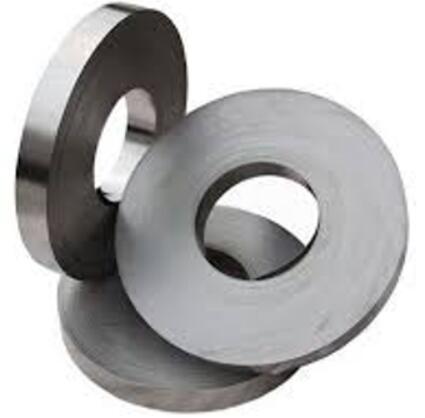
SK5 SK85 JIS Carbon Tool Steel
Introduce SK85 Sk5 steel
Sk85 Sk5 is a Japanese high-range Carbon steel. After quenching and tempering, sk5 steel has high hardness and wear resistance. high carbon steel is used to make various tools which request high hardness and wear resistance, such as the shape of the mold and the simple punch, metal cutting tools, drilling tools, woodworking cutter, countersink drills, axes, chisels, hand saws longitudinal and fitter assembly tools, rivet die and other minor tools. We can supply SK5 steel in hardened & tempered process and annealing process.
SK85 Sk5 steel appliction
It’s used in a wide range of tools (Razor blades, utility knives, scalpel blades, long edged tools, cutting tools) due to its workability, hardenability, price, and other features.
Quality Standard
JIS G4401 Carbon Tool Steel
SK85/SK5 Chemical Composition
| C(%) | Si(%) | Mn(%) | P(%) | S(%) | Cr(%) | Ni(%) | Cu(%) |
| 0.8-0.9 | 0.15-0.35 | 0.15-0.5 | ≦0.03 | ≦0.03 | ≦0.3 | ≦0.25 | ≦0.25 |
SK5 Specification
| Delivery condition (strip,coil,sheet) | Grade based on DIN Standard | Hardened and tempered conditions | |
| Hardness 29-55HRC | |||
| thickness | Width | ||
| High carbon steel | CK50,CK55, CK60,CK67,
CK70,CK75,SK85 |
0.15-2.5mm | 8-300mm |
| Edge process | slit edge; both rounded; one side round, one side slit; square etc | ||
| Finish surface | polished (blue, yellow, white, grey-blue, black, bright) or Nature etc | ||
| Tolerance | thickness +/-0.03mm max; width +/-0.3mm max | ||
| Physical Property | tensile strength – 1200-1850N/mm2 | ||
Physical properties
| Grade | Density | Specific heat | Coefficient of thermal expansion | Thermal conductivity | Electric resistance | Young’s modulus |
| g/cm3 | J(kg・K) | (0~100゜C)10-6/K | W/(m・K) | μΩ・cm | N/mm2 | |
| SK85 / SK5 | 7.84 | 490 | 11.0 | 50.2 | 18 | 208,000 |
Edge Retention:
offers impressive edge, being carbon steel with close to 1%, makes it very hard steel with great edge retention.
Corrosion Resistance:
offers decent corrosion resistance, not a bad one, but it must be taken care of to avoid future rust and corrosion.
Wear Resistance:
Great wear resistance, thanks to the fine grain and Carbon carbides.
Sharpness:
The rule says the harder the steel, the harder to sharpen it, SK5 can get very hard (62-63 HRC), which makes sharpening a bit hard.
Toughness:
SK85 Sk5 is very tough steel with great impact resistance, the steel offers a great balance between hardness and toughness at the cost of corrosion resistance
Why SK5 gets hard — and why it rusts
SK5 (JIS G4401, also written SK85) is a plain high-carbon steel: roughly 0.80–0.90 % carbon, with no chromium worth counting. That single fact explains both of its defining behaviours. The carbon is what allows it to reach 60–63 HRC after quenching, which is why it takes and holds a keen edge. The absence of chromium is why it has no passive layer, and therefore why it stains and rusts on contact with moisture.
For a blade or a tool that will be oiled and looked after, that is a good trade: you get hardness and edge retention that a stainless grade of the same price cannot match. For anything that will be washed, left wet or used outdoors, it is the wrong choice.
Hardening and tempering
| Step | Temperature | What it does |
|---|---|---|
| Annealing | 740–780 °C, furnace cool | Softens to about 190 HB for machining and grinding |
| Austenitising | 760–820 °C | Water or brine quench; oil gives lower, safer hardness |
| Tempering | 150–200 °C | 60–63 HRC with the brittleness taken out |
| Tempering, higher | 250–300 °C | Drops to about 55–57 HRC where a tougher edge is wanted |
Two practical warnings. SK5 is water-hardening, so thin sections distort and can crack if quenched unevenly — a blade is usually quenched edge-first. And the steel decarburises easily at austenitising temperature; a soak that is too long leaves a soft skin that will not hold an edge no matter what the core hardness reads.
How SK5 compares with the alternatives
| Grade | Carbon | Hardness | Against SK5 |
|---|---|---|---|
| SK5 / SK85 | 0.80–0.90 % | 60–63 HRC | The baseline: hard, cheap, rusts |
| AISI 1095 | 0.90–1.03 % | 60–64 HRC | Slightly more carbon, similar behaviour, also non-stainless |
| O1 tool steel | 0.90 % + Cr, W | 60–62 HRC | Oil-hardening, less distortion, better wear resistance, dearer |
| 8Cr13MoV | about 0.8 % + 13 % Cr | 56–58 HRC | Stainless, softer, far easier to sharpen |
The choice usually comes down to one question: will the tool be kept dry? If yes, SK5 delivers more hardness per unit cost than anything else in its class. If no, the stainless grades win by default, even though they hold a lesser edge.
Where SK5 is specified
Hand saws, chisels, axes, plane irons, scissors, kitchen and utility knives, scalpel and razor blades, spring washers, and the simple punches and small moulds that need hardness more than toughness. The same properties that suit a cutting edge — high hardness, low distortion in thin sections — are what make it usable for light tooling.
You get chemical composition, mechanical properties and a price — with inspection certificates to EN 10204 3.1 issued against the heat number.