
WHAT IS METAL AGING?
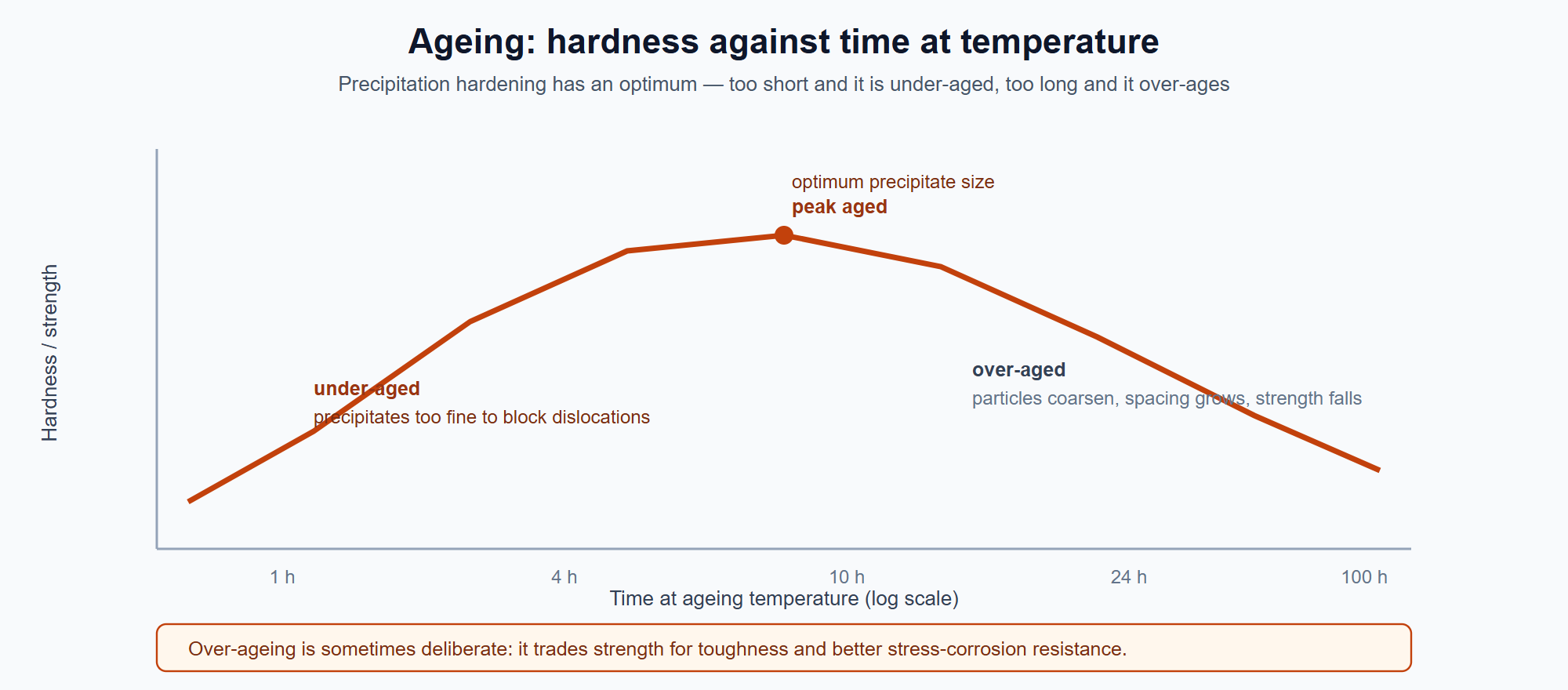
Metal aging is one of the most common ways to alter the properties of a metal alloy. While many metals may have their properties altered through heating and quenching or work hardening, some metal alloys are specifically formulated to be aged. Aging can alter the physical and aesthetic properties of an alloy to give it characteristics quite different than its unaged form.
What is Metal Aging?
Metal aging is a process used on solution heat-treated metal alloys that can be done artificially or happen naturally. Natural aging occurs throughout the life of the metal alloy. During the natural aging process, super-saturated alloying elements within the metal alloy form what are known as metal precipitates. These precipitates block dislocations in the metal, increasing the strength and hardness of a metal alloy while reducing its ductility. Artificial aging is a process that is used to accelerate the formation of precipitates in a solution heat-treated metal alloy to a rate that is much faster than the natural aging process. The artificial aging process is performed by elevating the temperature of the solution heat-treated metal alloy to a point below its recrystallization temperature but high enough to speed up precipitate formation. Once the alloying element precipitates have become the correct size, the metal alloy is then cooled rapidly to prevent any further change in the metal precipitates.
What Types of Metals Can Be Aged?
There are many types of metal alloys that can be aged to alter their physical properties, as long as they are solution heat-treatable:
Aluminum
Stainless Steel
Copper Alloys
Other Metal Alloys
Aluminum: The 2XXX, 6XXX, and 7XXX series of aluminum alloys are all ageable and many of their various forms derive their strength from artificial aging. One of the most common aged aluminum alloys is 6061-T6. It has magnesium silicide precipitates that block dislocations and increase its strength and hardness greatly in the -T6 form.
Stainless steel: 17/10P, 17/4PH, and 17/7PH are a few common stainless steel alloys that have extremely high strengths and hardnesses when they are properly aged because of the metal alloy precipitates in their structures.
Copper alloys: C17200 and C17300 are two copper-beryllium alloys that are frequently used in industry. Generally known for being soft and ductile, copper can be quite hard, strong, and brittle when the right additions of alloying elements are used with a proper aging technique.
Other metal alloys: Titanium, nickel, and magnesium, as well as several other metals, can be aged if they have alloying elements in their chemical makeup that make them solution heat-treatable.
Overaging
One concern when aging a metal alloy, either naturally or artificially, is something known as overaging. This occurs when the precipitates change in size due to an aging process that is performed past the point of being beneficial to the application. This often results in reduced strength and hardness. Two common ways this happens is by welding or cold working a metal. Care should be taken to determine if a solution heat-treatable metal needs to be artificially aged again, following one of these two processes to ensure that the desired mechanical properties are still present.
Ageing is not a synonym for getting older
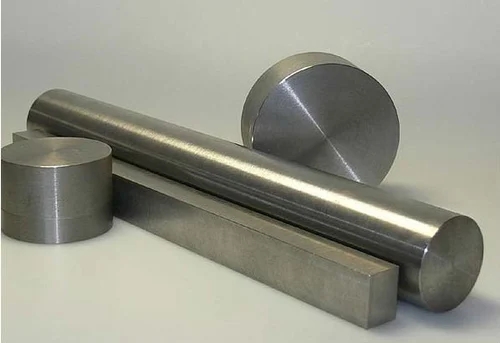
Ageing, or precipitation hardening, raises strength by holding a supersaturated alloy at a moderate temperature until fine particles precipitate. Those particles block dislocation movement, and the alloy gets stronger.
It applies to precipitation hardening stainless steels (17-4PH, 17-7PH), to aluminium alloys, and to some nickel and titanium alloys. It is not a treatment for plain carbon steel.
There is an optimum, and it is chosen
Hold too short and the precipitates are too fine to be effective — under-aged. Hold too long and they coarsen and the spacing between them grows, so dislocations pass more easily — over-aged, and the alloy softens.
That is why the condition letter matters so much on a purchase order. 17-4PH in H900 is aged at 480 °C for one hour; in H1150 it is aged at 620 °C for four. The first is stronger and less tough, the second is the reverse, and both are “17-4PH”.
Why anyone would over-age deliberately
Because over-ageing trades strength for two things that matter in service: toughness, and resistance to stress corrosion cracking. A part that keeps cracking in a chloride environment is often moved to a higher ageing temperature rather than to a different alloy.
What to specify
Grade, condition letter, and whether the part will be machined before or after ageing. Dimensional change during ageing is small but real, and on a close-tolerance part it has to be planned for.