
Roller for hot and cold rolling
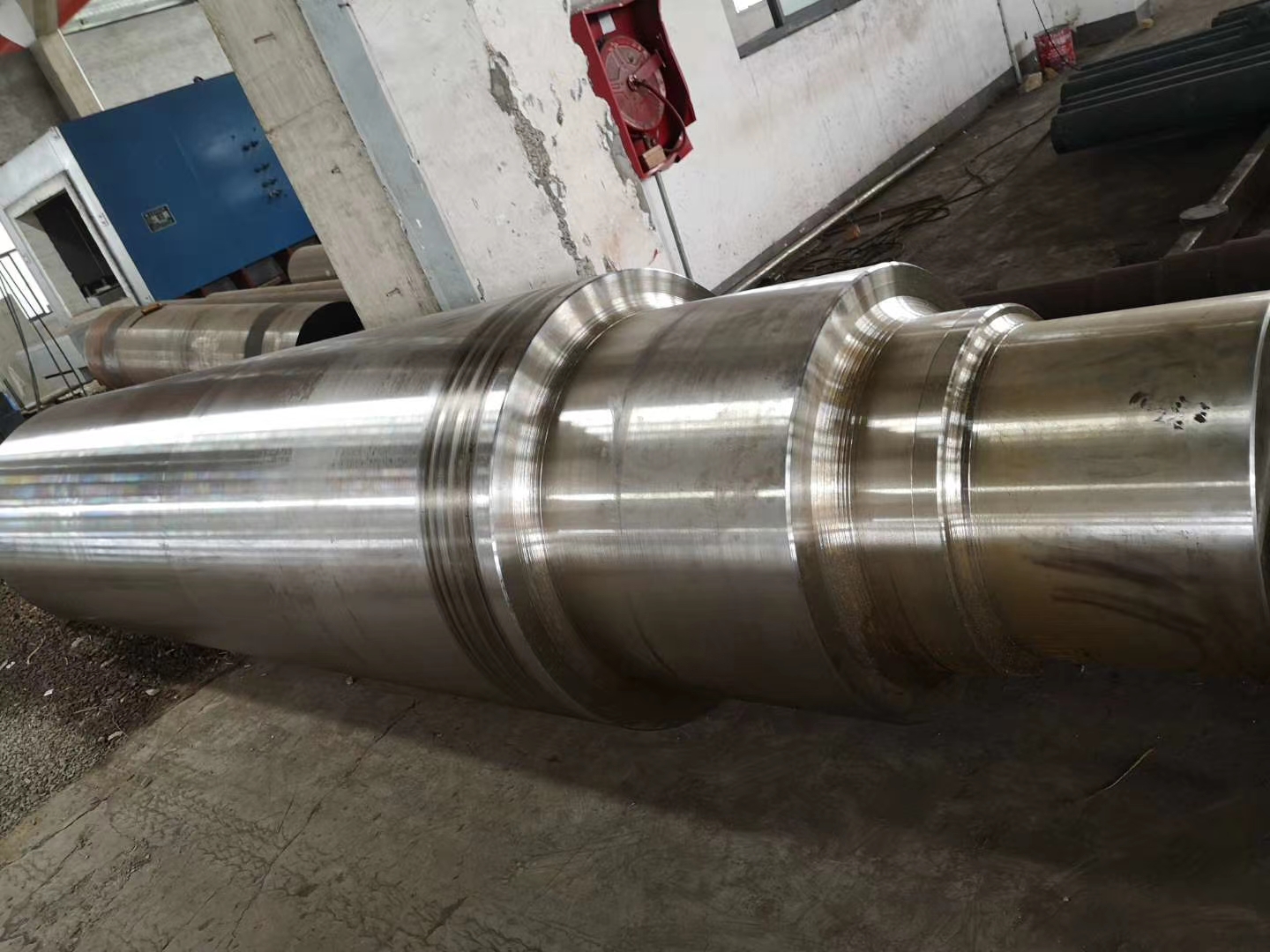
We supply high quality forged and cast ferrous and non-ferrous rolls for a variety of hot and cold rolling applications.
- Forged Work Rolls for strip and coil mills
- Forged and Cast Backup Rolls for plate production
- Cast Rolls for use in profile and long section mills
- Fabricated and Coated Rolls for use in furnaces
- Tool Steel Rolls for the production of both welded and seamless pipe, including sizing and straightening
- A variety of Transport Rolls
- Carbide and HSS rolling rings for rod, bar and rebar
Our rolls can be supplied fully finished and hardened in a wide variety of industry standard and proprietary material grades and dimensions to suit the required application.
Common forged materials:
Carbon steels such as C40, C60
High strength low alloy steels such as 42CrMo4, 34CrNiMo6 and 26NiCrMoVV8-5
Stainless steels including X2CrNiN18-10 and X2CrNiMoN17-11-2
Tool steels including X40CrMoV5-1 and 55NiCrMoV7
Common cast materials:
Irons including Acicular spheroidal graphite, Pearlitic and bainitic
Adamite cast steel
High speed steel
Indefinite chill
Cast process
We offer both Centrifugally and Statically Cast Rolls.
Quality parameters such as straightness, concentricity and dimensional tolerances are critical and all our components are therefore thoroughly inspected and supplied with full inspection reports. See ‘Quality Assurance’ for further information about our testing and inspection capabilities.
Backup Rolls are supplied either cast or forged in different material grades with alloying content to meet the customer’s specific hardness and wear resistance requirements.
All rolls can be supplied with neck rings and bearing sleeves fitted.
Along with manufacturing to current drawings, we also have the capability to design and modify existing lines, whether this is simply offering an improved material for better product finish and longer tool life or providing a completely redesigned mill to expand on existing product lines.
Two different problems
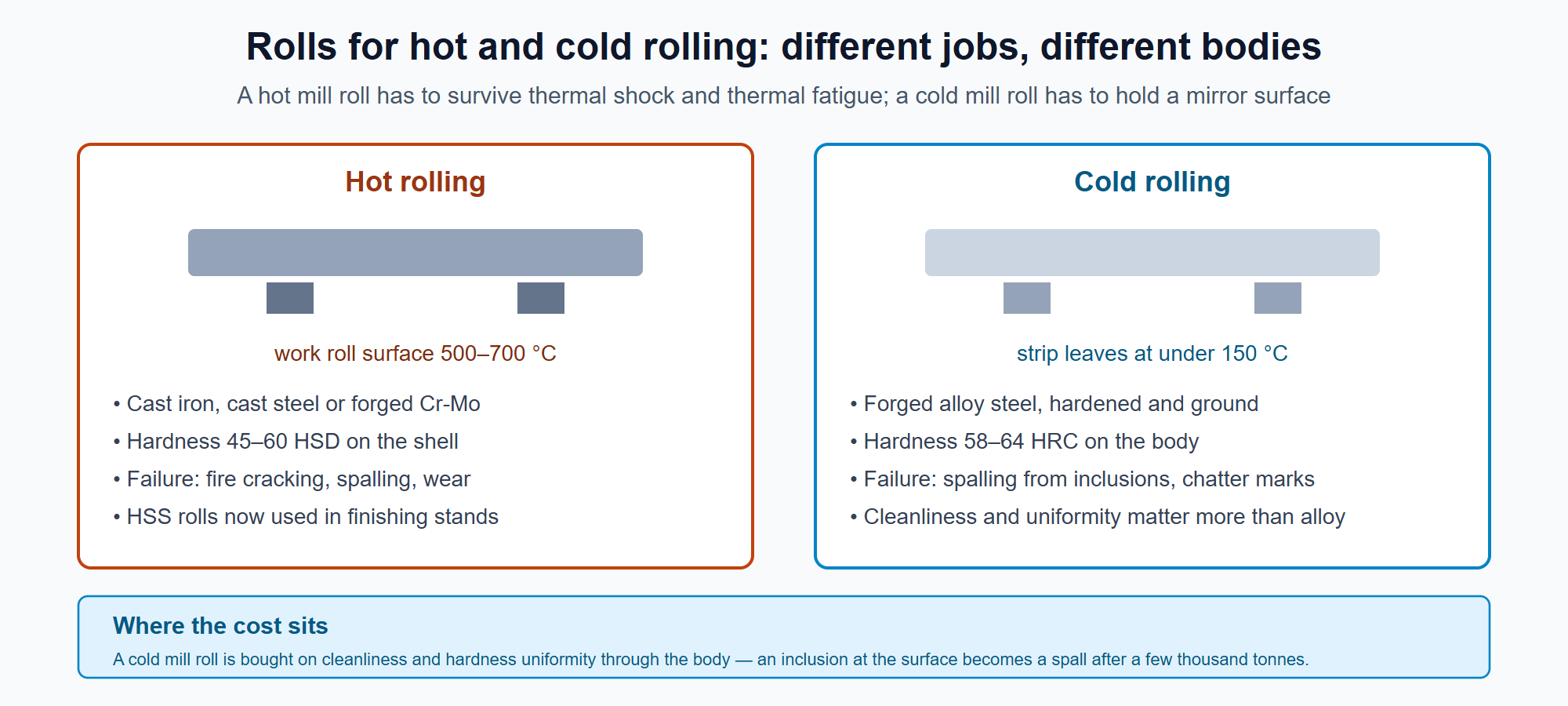
A hot mill roll works at 500–700 °C with water cooling between passes, so it lives with thermal shock and thermal fatigue. A cold mill roll never sees that temperature, but it has to hold a mirror surface while pressing steel at enormous load — so its enemy is spalling from inclusions and surface defects.
That is why the two are made from different materials and bought against different specifications.
What to specify
| Roll | Body material | Key requirement |
|---|---|---|
| Hot strip work roll | Cast iron, forged Cr-Mo, or HSS | Thermal fatigue resistance, fire-crack resistance |
| Hot roughing roll | Forged Cr-Mo or cast steel | Toughness — it takes bites and impacts |
| Cold mill work roll | Forged 5 % Cr or similar | Cleanliness, hardness uniformity, surface finish |
Where the failures come from
Fire cracking on a hot roll is thermal fatigue — it starts as a fine network on the surface and grows into spalling. Grinding it out early costs a little diameter; leaving it costs the roll.
Cold roll spalling usually starts at an inclusion or a grinding burn. That is why cold mill rolls are bought on cleanliness ratings and hardness uniformity through the body, not on the alloy alone.
