
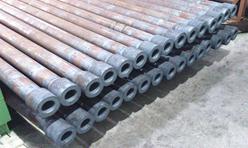
upset forging pipe p1
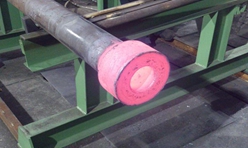
upset forging pipe p2
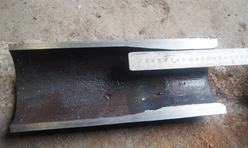
upset forging pipe p3
Upset forging increases the diameter of a workpiece by compressing its length. Measured by the number of pieces produced, it is the most widely used forging process in the world — engine valves, couplings, bolts, screws and most other fasteners are made this way.
How the process works
Upsetting is normally done on special high-speed machines called crank presses, though a vertical crank press or a hydraulic press can also be used. The machines are usually set up to work in the horizontal plane, which makes it quick to move a workpiece from one station to the next.
The starting stock is usually wire or rod. Larger machines accept bars up to 25 cm (9.8 in) in diameter and deliver a capacity of over 1,000 tons.
The standard upsetting machine uses split dies containing multiple cavities. The dies open far enough for the workpiece to move from one cavity to the next, then close; the heading tool, or ram, travels longitudinally against the bar and upsets it into the cavity. If every cavity is used on each cycle, a finished part comes off every cycle — which is what makes the process so efficient for mass production.
Design rules for upset parts
Three rules decide whether a part can be upset in one blow or needs several stations. They exist to stop the unsupported length from buckling instead of forming:
- The length of unsupported metal upset in one blow, without injurious buckling, is limited to three times the bar diameter.
- Stock longer than three times the diameter can still be upset, provided the finished diameter is no more than 1.5 times the stock diameter.
- Where the stock is longer than three times the diameter and the cavity is not more than 1.5 times the stock diameter, the unsupported length beyond the die face must not exceed one bar diameter.
Where it is used
Engine valves, couplings, bolts, screws and other fasteners — anything with a local enlargement on a straight shank. The same logic applies to tube: upset ends on pipe give a thicker wall for threading or for a welded joint without machining a separate fitting.
Related reading
- Basics of steel and metal forging — how upsetting sits alongside open-die and closed-die forging.
- Quenching and tempering of large forgings — what happens to a forged part after it leaves the press.
- Cast vs forged steel — why a forged fastener behaves differently from a cast one.
- Hot rolled mill work rolls — another product made by hot working rather than machining.
You get chemical composition, mechanical properties and a price — with inspection certificates to EN 10204 3.1 issued against the heat number.