
Injection Mould Tool Steel
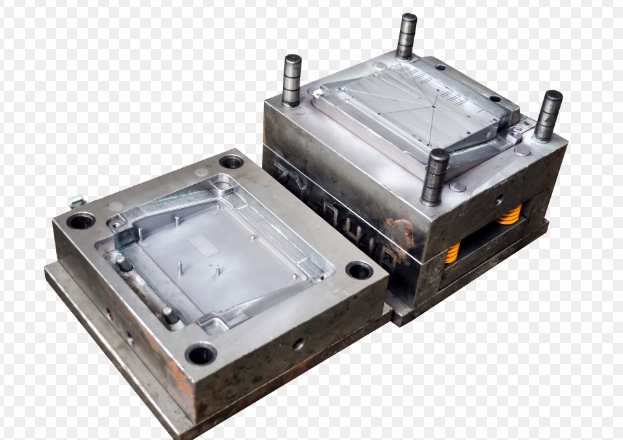
Fushun are main manufacturer of tool steel for Injection Mould.
What is Injection Mould?
An injection mold is a specialized tool used in the manufacturing process of plastic products through injection molding. It consists of two main parts: the core (male) and cavity (female), which when closed together form the shape of the desired plastic product. These precision-engineered molds are essential components in mass production, enabling manufacturers to produce complex plastic parts with high accuracy and consistency.
The primary function of injection molds is to receive molten plastic material injected under high pressure and temperature, shape it according to the mold design, and cool it to form the final product. These molds also incorporate various features such as cooling channels, ejector systems, runners, gates, and vents to ensure proper material flow, cooling, and part ejection. They are designed to withstand thousands of production cycles while maintaining dimensional accuracy and surface quality.
Injection molds are typically manufactured from tool steels and alloys that possess specific characteristics crucial for their performance. These materials exhibit high wear resistance, excellent thermal conductivity, good machinability, and superior hardness. The mold materials must also demonstrate strong resistance to thermal fatigue, corrosion, and mechanical stress. Additional surface treatments and coatings are often applied to enhance durability and improve release properties, ensuring longer mold life and better part quality.
Injection Mould Materials
| — | — | 1.2825 | 95MnWCr5 | MnCrWV |
| — | — | 1.2824 | 70MnMoCr8 | 7CrMn2Mo |
| H11 | SKD6 | 1.2343 | X37CrMoV5-1 | 4Cr5MoSiV |
| H13 | SKD61 | 1.2344 | X40CrMoV5-1 | 4Cr5MoSiV1 |
| — | — | 1.1191 | C45U | SM45 |
| — | — | — | SM50 | |
| — | — | SM55 | ||
| P20 | — | 1.2311 | 35CrMo7 | 3Cr2Mo |
Chemical Composition of Injection Mould
| Grade | C | Si | Mn | Cr | W | Mo | V |
| MnCrWV | 0.90~1.05 | 0.10~0.40 | 1.05~1.35 | 0.50~0.70 | 0.50~0.70 | 0.05~0.15 | |
| 7CrMn2Mo | 0.65~0.75 | 0.10~0.50 | 1.80~2.50 | 0.90~1.20 | 0.90~1.40 | ||
| 4Cr5MoSiV | 0.33~0.43 | 0.80~1.20 | 0.20~0.50 | 4.75~5.50 | 一 | 1.10~1.60 | 0.30~0.60 |
| 4Cr5MoSiV1 | 0.32~0.45 | 0.80~1.20 | 0.20~0.50 | 4.75~5.50 | 1.10~1.75 | 0.80~1.20 | |
| SM45 | 0.42~0.48 | 0.17~0.37 | 0.50~0.80 | ||||
| SM50 | 0.47~0.53 | 0.17~0.37 | 0.50~0.80 | ||||
| SM55 | 0.52~0.58 | 0.17~0.37 | 0.50~0.80 | — | |||
| 3Cr2Mo | 0.28~0..40 | 0.20~0.80 | 0.60~1.00 | 1.40~2.00 | 0.30~0.55 |
Properties of Injection Mould Steel
| Grade | Annealed HBW |
| MnCrWV | ≤255 |
| 7CrMn2Mo | ≤235 |
| 4Cr5MoSiV | ≤229 |
| 4Cr5MoSiV1 | ≤229 |
| SM45 | 155~215 |
| SM50 | 165~225 |
| SM55 | 170~230 |
| 3Cr2Mo | 235 |
Available Shapes from Fushun
*Round Bar
*Flat Bar
*Block
*Plate
Contact Information
Welcome your inquiry. We will send you a free quotation within 24 hours.
Choosing the mould steel by resin, not by habit
Most mould steel decisions are made by copying the last mould. The resin should decide, because the resin is what attacks the steel. The table below is the decision path we use when a customer sends a part drawing and a resin rather than a steel grade.
| Duty | Grade | Hardness as supplied | Why |
|---|---|---|---|
| PP, PE, PS, ABS — general purpose | P20 / 1.2311 | 28–32 HRC | Pre-hardened, cheap, adequate wear resistance |
| Large moulds, thick sections | 1.2738 / 718 | 29–34 HRC | Nickel added for hardenability through the block |
| PVC, acetate, flame-retardant resins | 1.2316 | 280–325 HB | 16 % chromium resists the acid released during processing |
| Optical parts, high polish | 1.2083 / S136 | Annealed, hardened to 48–52 HRC | High chromium, takes a mirror finish, resists corrosion |
| High-volume abrasive filled resin | 1.2344 / H13 | Hardened to 48–52 HRC | Hot work steel used for wear resistance and toughness |
| Small precision moulds, no post-hardening | NAK80 | about 40 HRC | Pre-hardened, excellent polishability, weldable |
Pre-hardened or through-hardened
A pre-hardened block arrives ready to cut, which removes a heat treatment cycle, the distortion that comes with it, and the risk of a cavity moving after hardening. That is why P20 and 1.2738 dominate. The trade-off is hardness: 30 HRC wears faster than 50 HRC, so a mould running abrasive filled resin at high volume will not last in a pre-hardened grade.
Through-hardened grades (1.2083, 1.2344) are chosen when wear life or polish quality outweighs the extra processing. The cost is not just the heat treatment — it is the machining allowance left for distortion, and the risk of cracking in a complex cavity.
What actually limits mould life
Not the steel grade alone. In practice the failure modes are: corrosion of the water channels where the water is untreated, wear at the gate where the melt enters at high velocity, and cracking at sharp internal corners where the stress concentrates. A better steel delays all three, but a radius at the corner and a water treatment plan do more per euro than moving from P20 to a hardened grade.
What to send us with an enquiry
The resin and any fillers, the expected shot count, the maximum block size, and whether the cavity needs a mirror polish. With those four answers the grade choice is usually unambiguous, and it is often cheaper than the one the drawing specifies.
You get chemical composition, mechanical properties and a price — with inspection certificates to EN 10204 3.1 issued against the heat number.
