
Nimonic Alloy C-263, N07263, 2.4650
Brand name
Nimonic C-263, nicrofer 5120 CoTi
Trade name
Alloy C-263
Standards
| Material No. | EN Designation | UNS | Alloy |
| 2 .4650 | NiCr20Cr20MoT | N07263 | C-263 |
Description
Alloy C-263/2.4650 is a nickel-chromium-cobalt-molybdenum alloy
Special properties
Outstanding creep strength up to 850℃. Excellent resistance to oxidation up to 100℃.
Chemical Composition
| Cr | Mo | Cu | Ni | Ti |
| 19.0-21.0 | 5.60-6.00 | ≤0.20 | Rest | 1.90-2.40 |
| C | Si | Mn | P | S |
| 0.04-0.08 | ≤0.40 | ≤0.60 | ≤0.02 | ≤0.007 |
| Al | Co | B | ||
| 0.30-0.60 | 19.0-21.0 | ≤0.005 |
Mechanical Properties 20℃
| 0.2% Yield strength Rp
≥N/mm2 |
Tensile strength Rm
N/mm2 |
Elongation A5
≥% |
Modulus of elasticity
kN/mm2 |
| 570 | ≥970 | 30 | 222 |
Physical Properties 20℃
| Density
g/cm3 |
specific heat capacity
J/kg K |
Thermal conductivity W/m K | Electrical resistivity
Ω mm2/m |
| 8.4 | 426 | 11.7 | 1.15 |
Suitable welding filler materials
2.4650
Application
Parts for gas turbines.
Available forms for 2.4650 / ALL0Y C263
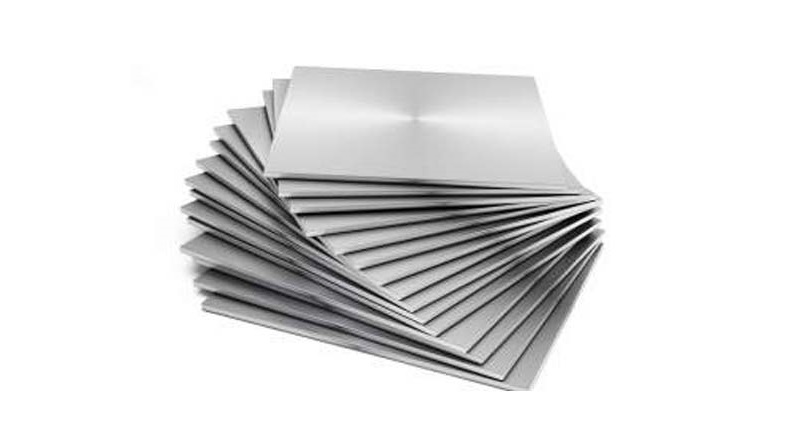
Sheets/Plates
Bars
Wire
Tubes/Pipes
Fittings
Forged / cast parts
Finished part (drawing)
What C-263 is
Nimonic C-263 (UNS N07263) is an age-hardenable nickel-chromium-cobalt alloy with molybdenum and titanium. It is strengthened by the same kind of gamma-prime precipitation as Waspaloy, but with a lower volume fraction — which makes it considerably easier to form and weld while still holding useful strength to about 900 °C.
That trade is the reason it exists: in gas turbine combustion chambers and casings, weldability and formability matter as much as the last few megapascals of strength.
Where it is chosen
- Combustion chamber liners and transition pieces
- Turbine rings, casings and seals
- Sheet fabrications where the part is formed and welded, then aged
What to specify
Condition (solution treated, or solution treated and aged), and whether the ageing is done before or after welding. Ageing after welding is normally required for the strength to develop in the joint — but it must be done at a temperature that does not distort a thin fabricated assembly, which is where the procedure gets interesting.
Ask for the grain size as well: fine grain helps fatigue and forming, coarse grain helps creep. The two requirements pull in opposite directions on a sheet alloy.
Comparing with the other grades
- Alloy 602 CA / 2.4633
- Inconel 617 / 2.4663
- Inconel 690 / N06690
- Inconel 693 / N06693
- RA 333 / N06333
- Inconel against Incoloy — which family to be in at all.
- Inconel 617 — the solid-solution alternative at the same temperature.