
SAE 4320 637M17 DIN 1.5714 16NiCr4 Special Alloy Case Hardening Steels
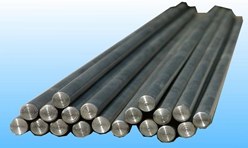
16NiCr4 SAE4320 637M17 DIN1.5714 Special Alloy Case Hardening Steels
16NiCr4 Introduce and applications
16NiCr4 is a case-hardening steel widely used for high-strength core parts, structural parts subject to abrasion and variable loads typically used for small-sized parts, such as loaded gears, screws, pins, shafts, pivots, machine parts, cars and engines
typically used for small parts such as heavy-duty sprockets, screws, pins, shafts, spigots, machine parts, cars and motors.
1 All Grades Comparison:
| DIN | Material No. | AFNOR | SAE | BS |
|---|---|---|---|---|
| 16NiCr4 | 1.5714 | 16NC6 | 4320 | 637M17 |
2 Quality Standard:
BS EN 10084 2008 Case hardening steels
3 16NiCr4 Chemical Composition(%)
| C | Mn | Si | P | S | Cr | Ni |
|---|---|---|---|---|---|---|
| 0.13-0.19 | 0.70-1.00 | 0.40 max | 0.025 max | 0.035 max | 0.60-1.00 | 0.80-1.10 |
4 Mechanical Properties(values obtained on test blanks after core hardening + stress-relieving)
| Test Blanks Diameter(mm) | Tensile Strength (Mpa) | Yield Strength (Mpa) | Elongation (longitudinal) (%) | Impact 20°C (J) | Hardness (HB) |
|---|---|---|---|---|---|
| 11mm | 1080-1470 | 835 min | 9 min | 30 min | 327-417 |
| 30mm | 830-1130 | 590 min | 10 min | 32.5 min | 249-339 |
5 HEAT TREATMENT AND HOT PLASTIC DEFORMATION TEMPERATURES
| Process | TEMPERATURE ° C | Cooling Medium |
|---|---|---|
| Hot Forming | 900-1150 | air |
| Normalizing | 870 min | air |
| Soft Annealing | 700 min | air 217HB max |
| Carburising | 870-950 | / |
| Core hardening | 840-880 | oil-polymer salt bath |
| Carbonitriding | 750-930 | gas |
| Isothermal annealing | 860 min | cooling to 650, then air (HB 166-217) |
| Case hardening | 810-840 | oil-polymer salt bath |
| Tempering | 150-200 | / |
What the nickel is for
16NiCr4 carries about 1 % nickel on top of chromium and manganese. At 0.13–0.19 % carbon the core cannot harden much on its own, so the nickel is not there for hardness — it is there for toughness.
The result is a case-hardening steel whose core bends rather than breaks. That is the requirement in a gear that sees shock loading, a shaft with a keyway, or any part where a crack at the root would be catastrophic rather than merely expensive.
Where it fits against 20MnCr5
20MnCr5 gives a stronger core at lower cost; 16NiCr4 gives a tougher one. Choose by the failure mode: root bending fatigue favours strength, impact and shock favour toughness. In practice most designers move to 16NiCr4 after a 20MnCr5 part has cracked.
What to specify
Case depth, surface hardness, core hardness — all three — plus the grain size, because a coarse-grained heat will produce a brittle case that chips under load even though the hardness figures look correct.
