
1.6511, 36CrNiMo4, Alloy Steel
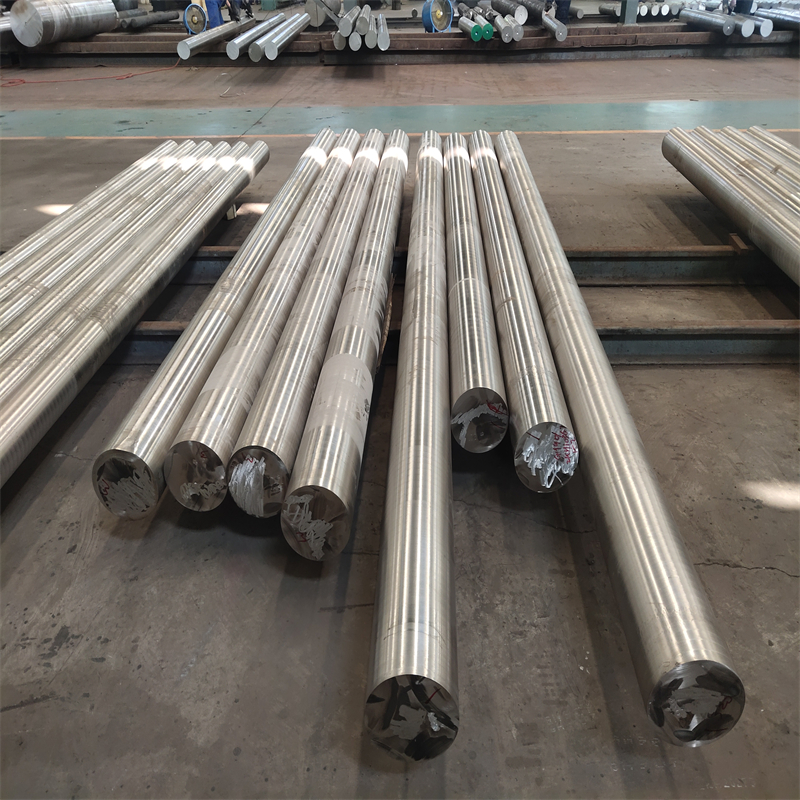
Description
1.6511 is a heat treatable, low alloy steel containing nickel, chromium and molybdenum. It is known for its toughness and capability of developing high strength in the heat treated condition while retaining good fatigue strength.
Grade
| Mat. No. | EN | AISI/SAE |
| 1.6511 | 36CrNiMo4 | 4340 |
Chemical Composition (in weight %)
| C | Si | Mn | Cr | Mo | Ni |
| 0.36 | max. 0.40 | 0.65 | 1.05 | 0.20 | 1.05 |
Applications
For permanently stressed components with large cross sections for automotive and mechanical engineering. For economic performance under severe dynamic stress, parts must be designed for optimum strength or toughness.
Physical properties (average values) at ambient temperature
Modulus of elasticity [103 x N/mm2]: 210
Density [g/cm3]: 7.84
Soft Annealing
Heat to 650-700oC, cool slowly. This will produce a maximum Brinell hardness of 248.
Normalizing
Temperature: 850-880oC.
Hardening
Harden from a temperature of 820-860oC followed by water or oil quenching.
Tempering
Tempering temperature: 540-680oC.
Forging
Hot forming temperature: 1050-850oC.
Machinability
Machining is best done with this alloy in the annealed or normalized and tempered condition. It can be machined by all conventional methods.
Corrosion Resistance
This is a low alloy steel and not a corrosion resistant alloy. Protective coating should be used.
Welding
The alloy can be fusion or resistance welded. Preheat and post heat weld procedures should be followed when welding this alloy by established methods.
A general-purpose quench and temper grade
1.6511 (36CrNiMo4) is a nickel-chromium-molybdenum steel at about 0.36 % carbon, hardened and tempered to give high strength with good toughness. It is the European answer to 4340-type requirements, and it appears wherever a part has to carry heavy load and absorb some abuse.
Typical uses: crankshafts, large shafts, connecting rods, gear blanks, and heavy-duty fasteners.
Why the nickel is there
Nickel raises toughness at a given strength level and improves hardenability, which is what allows a large section to harden through rather than only at the surface. That is the reason a 1.6511 shaft can be specified at 1,000 MPa in a 200 mm section where a leaner Cr-Mo grade would have a soft core.
What to specify
Hardness at the test location, mechanical properties from a stated position (surface, mid-radius or centre), and the impact requirement at the service temperature. On a large forging, the properties at the centre are the ones that decide whether the part is acceptable — and they are much lower than at the surface.
Related reading
- 34CrNi3Mo — the higher-alloy grade for very large forgings.
- AISI 4140 — the leaner Cr-Mo alternative.
- AISI 4140 L80 — the same family in casing form.
