
SCM415 Alloy Steel
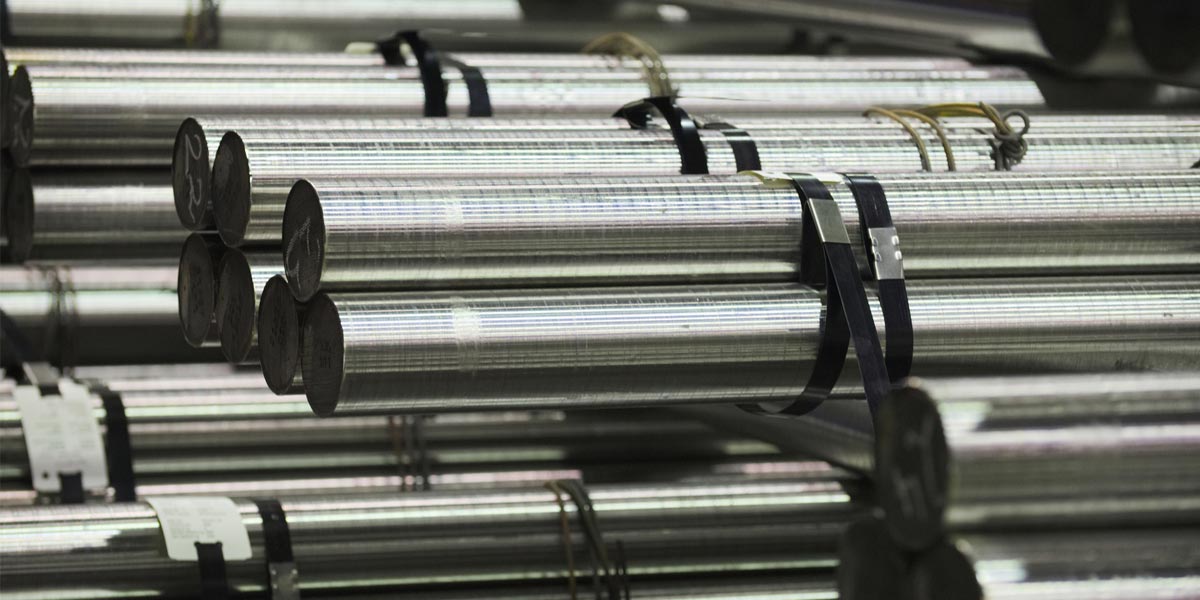
SCM415 whose surface are processed through carburizing hardening treatment are used for the parts which need high toughness or wear resistance, such as cylinder piston, crankshaft, gears, pin, shafts and so on.
SCM415 Steel is a high quality Quenched and Tempered Alloy Structural steel, It belong to the high quality medium carbon, Oil Quenched & Tempered Hardenss is 28-34 HRc.SCM415 Annealing delivery hardenss less than 250HB.
Our supply size :
Diameter : 80 to 600 mm ;
Length : 1000 to 9000 mm ;
Our advantage :
- High Quality, Reasonable Price
- Over 40 Years Experience
- ISO NQA Certificated Factory
- Worldwide shipping
- Emergency Orders and Fast Delivery
International Comparison of Materials
| INTER ISO | JAPAN | GERMANY | CHINA |
| JIS | DIN | GB | |
| 15CrMo4 | SCM415 | 15CrMo5 | 15CrMo |
Chemical Composition(JIS G4051)
| C(%) | Si(%) | Mn(%) | P(%) | S(%) | Ni(%) | Cr(%) | Mo(%) | Cu(%) |
| 0.13-0.18 | 0.15-0.35 | 0.6-0.85 | 0≦0.03 | 0≦0.03 | 0≦0.25 | 0.9-1.2 | 0.15-0.30 | 0≦0.3 |
Applications
SCM415 steel is a alloy structural steel. It is used for engineering structural, like high tensile shafts, bolts and nuts, gears, pinions and spindles. Locomotive traction with the big gear, supercharger drive gear, pressure vessel, rear axle, gear load of connecting rod and a spring clip,SCM415 can also be used to under 2000 m deep well of oil drill pipe joint and the fishing Alloy, and can be used for bending machine mould, etc
Product Features:
- High strength in room temperature and elevated temperature.
- High notch tolerance.
- Simplified design for bolting configuration
Conditions of heat treatment
Annealing: 850℃ Furnace Cooling
Normalization: 850~900℃ Air Cooling
Hardening: 850~900℃ 1st Oil Cooling, 800~850℃ 2rd Oil Cooling
Tempering: 150~200℃ Air Cooling
Criterion for heat treating conditions revise:
Ac: 770~835℃
Ar: 770~700℃
Ms: 410℃
Mechanical properties
Tensile strength (kgf/mm²): ≧85
Elongation (%): ≧16
Cross section reduction rate (%): ≧40
Impact value (J/cm2): ≧7
Hardness (Hb) : 235~321
Forming Option
1 Hot rolling process
2 Hot Forging: Electro-hydraulic; High-speed-hydraulic; Oil-hydraulic; Precision-forging
Heat-treatment Option
1 +A: Annealed (full/soft/spheroidizing)
2 +N: Normalized
3 +NT: Normalized and tempered
4 +QT: Quenched and tempered (water/oil)
Surface Option
1 Black Surface
2 Grounded: Bright but rough ; Not precision
3 Machining for plate: Bright and precision; Little turning scar
4 Peeled/Turned: Bright and precision; Little turning scar
5 Polished: Very Bright and precision size; Not turning scar
Other Services
1 Cutting: Small pieces
2 CNC Machine: Produce as your drawing
3 Package: Bare/Nylon/Canvas/Wooden
4 Payment:T/T, L/C, O/A(request credit)
5 Transport:FOB/CFR/CIF/DDU/DDP (train/ship/Air)
Mill test certificate
EN 10204/3.1 with all relevant data reg. chem. composition, mech. properties and results of testing.
We also supply :
4130 , 4130 p+x , 4140 , 4330v mod , 4340 , 4145h mod , 4317
1.8509 , 1.6523 , 1.7707 , 1.6657 , 1.6587 , 1.6582 , 1.6773
For all products, please check here: Fushun products
SCM415 is a carburising grade, not a quenched and tempered one
At 0.13–0.18 % carbon, SCM415 cannot be hardened through by quenching — there is not enough carbon in it. That is the point. The steel is designed to be carburised: carbon is diffused into the surface at 900–930 °C, the part is quenched, and the result is a hard case over a tough, low-carbon core.
This is why the grade is specified for gears, pins, shafts and piston pins — parts that need a wear-resistant surface and a core that will absorb impact without cracking. Judging SCM415 by its core hardness misses what it is for.
Case depth is a design decision
| Case depth | Approximate carburising time at 925 °C | Used for |
|---|---|---|
| 0.3–0.5 mm | 1–2 hours | Small gears, light loads |
| 0.6–0.9 mm | 3–5 hours | Automotive gears, general transmission |
| 1.0–1.5 mm | 6–10 hours | Heavy gears, high contact stress |
| 1.5–2.5 mm | 12–20 hours | Large industrial gearing — slow and expensive |
A rule of thumb for gears is a case depth of 0.15–0.20 × the module. Too shallow and the case collapses under contact stress; too deep and the case becomes brittle and the core support disappears, which shows up as case spalling rather than wear.
What goes wrong in service
Case spalling. Flakes of case break away from the surface, usually because the case is too deep relative to the section, or because the core hardness is too low to support it. The steel is not at fault; the heat treatment specification is.
Retained austenite. Over-carburising leaves austenite untransformed at the surface. It feels hard on the file test but converts to martensite under load, changing the dimension and softening the surface. Sub-zero treatment or a second temper fixes it.
Distortion. Carburising at 925 °C and then quenching is a severe thermal cycle. Long slender shafts and thin gear rims move, and the grinding allowance has to be sized for it.
SCM415 against the other carburising grades
| Grade | Character | Choose it when |
|---|---|---|
| SCM415 | Cr-Mo carburising, good core toughness | General gears and shafts, Japanese drawings |
| SCM420 / SCM421 | Higher carbon, stronger core | Heavier loaded gears needing core strength |
| 16MnCr5 | Mn-Cr, cheaper, European default | European gear drawings, moderate loads |
| 20CrMnTi | Chinese standard, Ti grain control | Domestic automotive volumes |