
SCM435 Alloy Steel
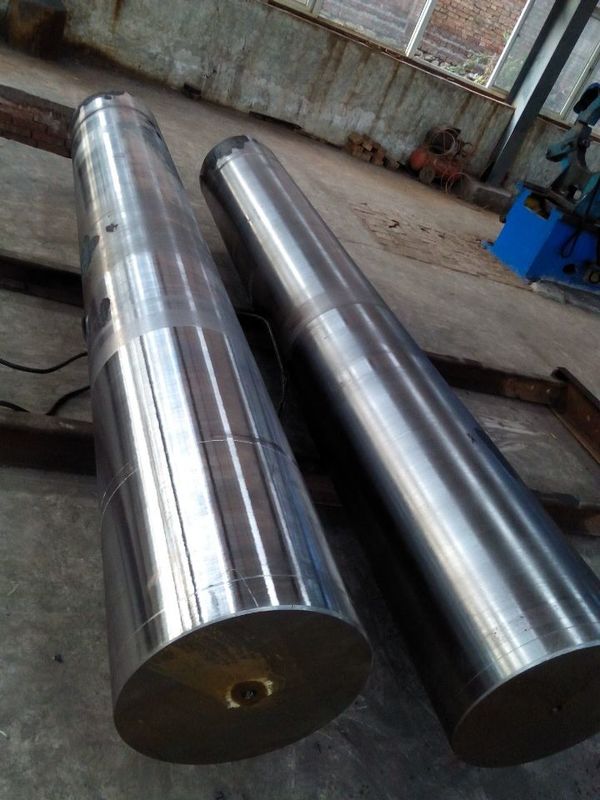
Grade : SCM435
Classification: Structural steel Chromium molybdenum steel
Standards: JIS G 4053 : Low-alloyed steels for machine structural use
Our supply size :
Diameter : 80 to 600 mm ;
Length : 1000 to 9000 mm ;
Our advantage :
- High Quality, Reasonable Price
- Over 40 Years Experience
- ISO NQA Certificated Factory
- Worldwide shipping
- Emergency Orders and Fast Delivery
Equivalent steel grade
| GB | ASTM/SAE/AISI | DIN | SCM |
| 35CrMo | 4135 | 34CrMo4 | SCM435 |
Chemical composition % of grade SCM435
| C(%) | Si(%) | Mn(%) | P(%) | S(%) | Cr(%) | Mo(%) | Cu(%) |
| 0.33-0.38 | 0.15-0.35 | 0.60-0.85 | ≦0.03 | ≦0.03 | 0.9-1.2 | 0.15-0.30 | ≦0.3 |
scm435 steel is a Chromium-Molybdenum through-hardening steel of medium hardenability. It is a general purpose high-tensile steel with medium strength level and good impact properties.
Application
scm435 steel bar is mainly used to produce high strength stud bolt, Threaded Rods , wind power bolt, pre-stressed anchor bolts, post stressed anchor bolt, Steel Tie Rod , tie bar, tension rod, Tension Bar etc. Shaft, axle shaft, crankshaft, shaft for sleeve, linear shaft, pump shaft, rotor shaft, sensor shaft, spline shaft, drive shaft, mandrel shaft, transmission shaft, screw rod etc. CNC machines, precision CNC machines etc. Ejector pins and Ejector rods.
Quenched and tempered properties:
Yield strength of scm435 steel: 930MPa min
Tensile strength of scm435 steel: 1080MPa min
Elongation of 34CrMo4 steel: 12% min
Reduction area of scm435 steel: 50% min
Rockwell hardness of scm435 steel: 32HRC min
Brinell hardness of annealed scm435 steel: 217HB max
Forming Option
1 Hot rolling process
2 Hot Forging: Electro-hydraulic; High-speed-hydraulic; Oil-hydraulic; Precision-forging
Heat-treatment Option
1 +A: Annealed (full/soft/spheroidizing)
2 +N: Normalized
3 +NT: Normalized and tempered
4 +QT: Quenched and tempered (water/oil)
Surface Option
1 Black Surface
2 Grounded: Bright but rough ; Not precision
3 Machining for plate: Bright and precision; Little turning scar
4 Peeled/Turned: Bright and precision; Little turning scar
5 Polished: Very Bright and precision size; Not turning scar
Other Services
1 Cutting: Small pieces
2 CNC Machine: Produce as your drawing
3 Package: Bare/Nylon/Canvas/Wooden
4 Payment:T/T, L/C, O/A(request credit)
5 Transport:FOB/CFR/CIF/DDU/DDP (train/ship/Air)
Mill test certificate
EN 10204/3.1 with all relevant data reg. chem. composition, mech. properties and results of testing.
We also supply :
4130 , 4130 p+x , 4140 , 4330v mod , 4340 , 4145h mod , 4317
1.8509 , 1.6523 , 1.7707 , 1.6657 , 1.6587 , 1.6582 , 1.6773
For all products, please check here: Fushun products
What the 0.35 % carbon actually buys you
SCM435 sits in the middle of the chromium-molybdenum family, and the carbon level is what defines it. At 0.33–0.38 % C the steel will harden through a moderate section and still temper back to a useful combination of strength and toughness. The chromium (0.90–1.20 %) provides hardenability and the molybdenum (0.15–0.30 %) does two jobs: it suppresses temper embrittlement, and it keeps the hardenability from being lost when the section is slow-cooled.
What that means in practice: SCM435 quenched and tempered at 550–650 °C typically lands between 800 and 950 MPa tensile, with yield around 600–750 MPa and elongation of 14–18 %. Those are the numbers behind fasteners of class 10.9 and 12.9, and behind shafts that carry torque without being through-hardened to the core.
Hardenability and the section-size limit
The reason SCM435 is not used for very heavy sections is hardenability, not strength. In oil, the steel hardens through roughly 25–30 mm; beyond that the core starts to come out as ferrite and pearlite rather than martensite, and the “quenched and tempered” properties stop applying to the middle of the bar.
If the part needs a 50 mm section with uniform properties, the answer is usually SCM440 (42CrMo4 / 4140) rather than a heavier temper on SCM435. If the part is small and only needs a hard case, the answer goes the other way — to a carburising grade such as SCM415 or 20MnCr5.
Heat treatment schedule
| Step | Temperature | Note |
|---|---|---|
| Normalising | 850–880 °C, air cool | Refines structure before machining or hardening |
| Annealing | 820–850 °C, furnace cool | For maximum machinability, about 200 HB |
| Austenitising | 850–880 °C | Oil quench; water only with a risk of cracking |
| Tempering | 550–650 °C | Below 500 °C the toughness drops away quickly |
| Stress relieving | 600–650 °C after rough machining | Removes machining stress before final cuts |
Machining and welding
In the annealed condition SCM435 machines well; in the quenched and tempered condition it machines adequately at 250–300 HB but tool life falls off above 320 HB. Welding is the weak point: at 0.35 % carbon the steel is not readily weldable, and any repair weld needs preheat around 200–250 °C, a low-hydrogen consumable, and a post-weld stress relief. Welding a SCM435 part without those steps is a cracking risk, not a cosmetic one.
Why buyers confuse it with SCM440
The two grades are one step apart and often quoted interchangeably, which causes real problems. SCM435 (4135 / 34CrMo4) has 0.35 % carbon and moderate hardenability; SCM440 (4140 / 42CrMo4) has 0.42 % and harder-hitting properties. A drawing that specifies SCM440 and receives SCM435 will not reach the specified hardness after the same heat treatment, and a part designed around SCM435 that gets SCM440 may crack in service because the extra carbon costs toughness.
If the certificate does not state the grade, check the carbon: 0.33–0.38 is 435, 0.38–0.45 is 440.
You get chemical composition, mechanical properties and a price — with inspection certificates to EN 10204 3.1 issued against the heat number.