
SCM440 Alloy Steel
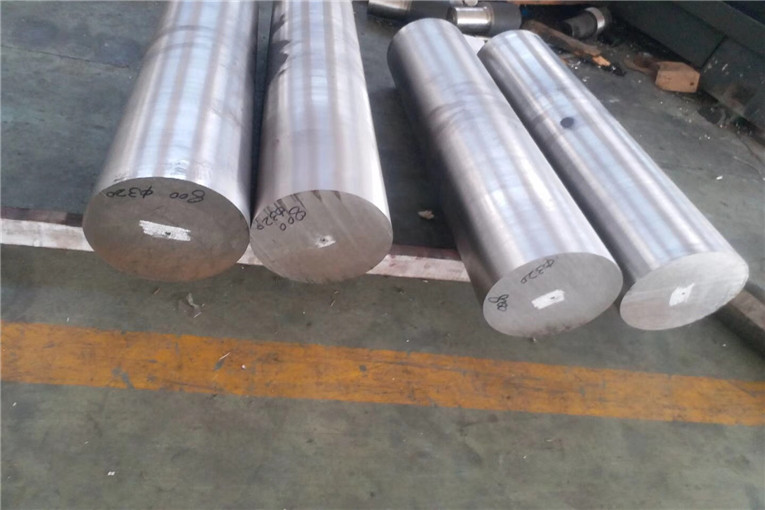
Grade :SCM440
Classification: Structural steel Chromium molybdenum steel
Standards:JIS G 4053 : Low-alloyed steels for machine structural use
Our supply size :
Diameter : 80 to 600 mm ;
Length : 1000 to 9000 mm ;
Our advantage :
- High Quality, Reasonable Price
- Over 40 Years Experience
- ISO NQA Certificated Factory
- Worldwide shipping
- Emergency Orders and Fast Delivery
Comparison of Materials
| EU | INTER | USA | JAPAN | GERMANY | CHINA |
| EN | ISO | AISI | JIS | DIN | GB |
| 42CrMo4 | 42CrMo4 | 4140 | SCM440 | 42CrMo4 | 42CrMo |
Chemical Composition(JIS G4051)
| C(%) | Si(%) | Mn(%) | P(%) | S(%) | Cr(%) | Mo(%) | Ni(%) | Cu(%) |
| 0.38-0.43 | 0.15-0.35 | 0.6-0.85 | 0≦0.03 | 0≦0.03 | 0.9-1.2 | 0.15-0.3 | 0≦0.25 | 0≦0.3 |
Introduce
SCM440 is medium carbon chromium molybdenum alloy steel, which is an alloy steel containing chromium and molybdenum. It has the advantages of stable composition, low harmful elements, high steel purity, small decarburization layer and few surface defects. It is easy to be spheroidized and has low cold cracking rate. It is usually hardened and tempered. The ultimate tensile strength is 850-1000 Mpa. This material achieves a very good balance between strength, toughness and wear resistance. The chromium content of the alloy provides good hardness permeability, and the molybdenum element imparts average hardness and high strength.
SCM440 reacts well in heat treatment and it is easy to process under heat treatment conditions. This material provides many desirable properties such as good strength and wear resistance, excellent toughness, good ductility and resistance to high-temperature stresses.
Product Features:
- High strength and toughness.
- Great property of quenching and can be deep hardened.
- Less tempering brittleness tendency.
- Great machining performance under high temperature and nice appearance after machining.
- Good performance in weld ability.
- Excellent performance in impact absorption, such as where the hammer may bounce back and has barely any damage caused upon impact.
Conditions of heat treatment
Annealing: 830℃ Furnace Cooling
Normalization: 830~880℃ Air Cooling
Hardening: 830~880℃ Oil Cooling
Tempering: 530~630℃ Rapid Cooling
Criterion for heat treating conditions revise:
Ac: 750~790℃
Ar: 740~690℃
Ms: 310℃
Mechanical properties
Tensile strength (kgf/mm²): ≧100
Yield strength (kgf/mm²): ≧85
Elongation (%): ≧12
Cross section reduction rate (%): ≧45
Impact value (J/cm2): ≧6
Hardness (Hb) : 285~352
Forming Option
1 Hot rolling process
2 Hot Forging: Electro-hydraulic; High-speed-hydraulic; Oil-hydraulic; Precision-forging
Heat-treatment Option
1 +A: Annealed (full/soft/spheroidizing)
2 +N: Normalized
3 +NT: Normalized and tempered
4 +QT: Quenched and tempered (water/oil)
Surface Option
1 Black Surface
2 Grounded: Bright but rough ; Not precision
3 Machining for plate: Bright and precision; Little turning scar
4 Peeled/Turned: Bright and precision; Little turning scar
5 Polished: Very Bright and precision size; Not turning scar
Other Services
1 Cutting: Small pieces
2 CNC Machine: Produce as your drawing
3 Package: Bare/Nylon/Canvas/Wooden
4 Payment:T/T, L/C, O/A(request credit)
5 Transport:FOB/CFR/CIF/DDU/DDP (train/ship/Air)
Mill test certificate
EN 10204/3.1 with all relevant data reg. chem. composition, mech. properties and results of testing.
We also supply :
4130 , 4130 p+x , 4140 , 4330v mod , 4340 , 4145h mod , 4317
1.8509 , 1.6523 , 1.7707 , 1.6657 , 1.6587 , 1.6582 , 1.6773
For all products, please check here: Fushun products
What the 0.42 % carbon buys, and what it costs
SCM440 (42CrMo4 / 4140) is the workhorse of the chromium-molybdenum family. At 0.38–0.45 % carbon it will harden through a substantially larger section than SCM435, and after tempering at 550–650 °C it delivers roughly 900–1,100 MPa tensile with yield around 750–900 MPa. That is why it turns up in gears, shafts, connecting rods, mould bases and high-strength fasteners.
The cost is on the fabrication side. At this carbon level the steel is not readily weldable, and it is susceptible to hydrogen embrittlement when it is both high-strength and plated.
Hardenability: where 4140 stops working
In oil, SCM440 hardens through roughly 40–50 mm. Beyond that the core comes out as bainite or ferrite-pearlite, and a part described as “quenched and tempered” has a soft centre with a hard skin. For sections over about 60 mm the options are a more heavily alloyed grade (4340 / 34CrNiMo6, which adds nickel for depth), polymer quenching with better agitation, or accepting a lower core strength in the design calculation.
The two failures that catch buyers
Hydrogen embrittlement. A class 12.9 fastener in 42CrMo4 that has been electroplated without a post-plate bake can crack days after installation, with no visible corrosion and no overload. The fix is a bake at 200–230 °C within a few hours of plating — and the reason to specify it is that the failure mode gives no warning.
Substituting 4140 for 42CrMo4 without checking the carbon. The two are treated as identical, and for most purposes the overlap is real. But the JIS, EN and AISI ranges are not word-for-word the same, and a heat at the top of the AISI carbon range can behave differently in a critical heat treatment. The certificate should be read, not assumed.
Tempering: what each temperature range gives
| Temper | Hardness | Tensile (typical) | Use |
|---|---|---|---|
| 200 °C | 50–54 HRC | 1,800–2,000 MPa | Wear parts, mould bases — low toughness |
| 400 °C | 42–46 HRC | 1,300–1,500 MPa | Shafts, gears where strength dominates |
| 550 °C | 32–36 HRC | 1,000–1,100 MPa | General engineering, good balance |
| 650 °C | 26–30 HRC | 800–900 MPa | Maximum toughness, sour service |
Note the 350–450 °C range: it is the temper embrittlement window for this family, and parts held there can lose impact toughness without losing hardness. If a drawing specifies 400 °C temper, it is worth asking why.
Welding and repair
Any weld on SCM440 needs preheat in the 200–300 °C range, a low-hydrogen consumable, and a post-weld heat treatment at 600–650 °C once the part has cooled. Skipping the PWHT leaves a hard, brittle heat-affected zone that will crack under service load — often at a stress well below the design value.
You get chemical composition, mechanical properties and a price — with inspection certificates to EN 10204 3.1 issued against the heat number.