
16MnCr5 1.7131 Alloy Steel
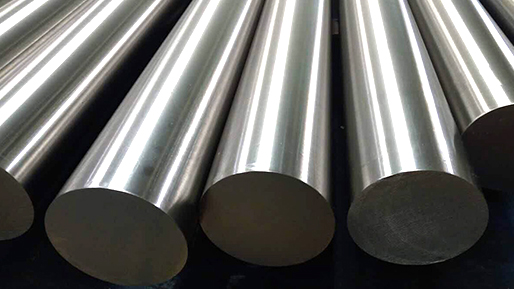
Grade :16MnCr5
Number:1.7131
Classification: Alloy special steel
Our supply size :
Diameter : 80 to 600 mm ;
Length : 1000 to 9000 mm ;
Our advantage :
- High Quality, Reasonable Price
- Over 40 Years Experience
- ISO NQA Certificated Factory
- Worldwide shipping
- Emergency Orders and Fast Delivery
Equivalent grades of steel 16MnCr5 (1.7131)
| EU | USA | Germany | France | England | Italy |
| EN | – | DIN,WNr | AFNOR | BS | UNI |
| 16MnCr5 | SAE5115 | 16MnCr5 | 16MC5 | 527M17 | 16MnCr5 |
Chemical composition % of steel 16MnCr5 (1.7131): EN 10084-2008
| C | Si | Mn | P | S | Cr |
| 0.14 – 0.19 | max 0.4 | 1 – 1.3 | max 0.025 | max 0.035 | 0.8 – 1.1 |
Standard:
EN 10084: 2008 Case hardening steels. Technical delivery conditions
EN 10132-2: 2000 Cold rolled narrow steel strip for heat treatment.Case hardening steels
EN 10263-3: 2001 Steel rod, bars and wire for cold heading and cold extrusion.case hardening steels
EN 10297-1: 2003 Seamless circular steel tubes Non-alloy and alloy steel tubes.
Applications
DIN 16MnCr5 1.7131 steel is widely used for a variety of applications in the used to the gearings in rotating machinery. Typical applications such as valve bodies, pumps and fittings, the high load of wheel, bolts, double-headed bolts, gears, internal combustion engine. Electric locomotives, machine tools, tractors, steel rolling equipment, boring machine, railway vehicle, and mining machinery transmission shaft on the steel ball, roller and shaft sleeve, etc.
Heat treatment
Annealing
Slowly heated to 790-810 ℃ and allow enough times, let the steel to be thoroughly heated, Then cool slowly in the furnace. Different annealing ways will get different hardness.The 16MnCr5 will get Hardness MAX 248 HB (Brinell hardness
Quenching and temperature
Heated slowly to 788°C, Then put in salt-bath furnace keep 1191 ℃to 1204 ℃。quenching by oil get 60 to 66 HRc hardness. High temperature tempering: 650-700℃,cool in air, get hardness 22 to 30HRC. Low temperature tempering: 150-200 ℃, Cool in ari, get 61-66HRC hardness.
Hot work and cold work
DIN 16MnCr5 steel can hot worked at 205 to 538°C, 16MnCr5 can be cold worked using conventional techniques in the annealed or normalized conditions.
Smelting Option
1 EAF: Electric Arc Furnace
2 EAF+LF+VD: Refined-smelting and vacuum degassing
3 EAF+ESR: Electro Slag Remelting
4 EAF+PESR: protective atmosphere Electro Slag Remelting
5 VIM+PESR: Vacuum induction melting
Forming Option
1 Hot rolling process
2 Hot Forging: Electro-hydraulic; High-speed-hydraulic; Oil-hydraulic; Precision-forging
Heat-treatment Option
1 +A: Annealed (full/soft/spheroidizing)
2 +N: Normalized
3 +NT: Normalized and tempered
4 +QT: Quenched and tempered (water/oil)
Surface Option
1 Black Surface
2 Grounded: Bright but rough ; Not precision
3 Machining for plate: Bright and precision; Little turning scar
4 Peeled/Turned: Bright and precision; Little turning scar
5 Polished: Very Bright and precision size; Not turning scar
Other Services
1 Cutting: Small pieces
2 CNC Machine: Produce as your drawing
3 Package: Bare/Nylon/Canvas/Wooden
4 Payment:T/T, L/C, O/A(request credit)
5 Transport:FOB/CFR/CIF/DDU/DDP (train/ship/Air)
Mill test certificate
EN 10204/3.1 with all relevant data reg. chem. composition, mech. properties and results of testing.
We also supply :
4130 , 4130 p+x , 4140 , 4330v mod , 4340 , 4145h mod , 4317
1.8509 , 1.6523 , 1.7707 , 1.6657 , 1.6587 , 1.6582 , 1.6773
For all products, please check here: Fushun products
Why 16MnCr5 is the European default for gears
16MnCr5 (1.7131) is a manganese-chromium carburising steel: about 0.16 % carbon, 1.1 % manganese and 0.95 % chromium. The manganese is the commercial trick — it is the cheapest element that raises hardenability, so 16MnCr5 delivers adequate core properties without nickel or molybdenum. That is why it became the standard gear steel across German and wider European drawing offices.
It is not a high-performance grade. Where the section is heavy, the load is high, or the service temperature is elevated, the molybdenum-bearing grades (SCM415, 20MoCr4) or the nickel grades (17CrNiMo6) take over. 16MnCr5 is the sensible default, not the answer to every gear.
Carburising and the core
The whole point of a 0.16 % carbon steel is that the core stays tough. After carburising at 900–930 °C, quenching and tempering at 150–200 °C, the case reaches 58–62 HRC while the core sits around 30–40 HRC depending on section and quench.
The core hardness is the part buyers forget. A gear with an excellent case but a soft core will fail by case crushing, not by wear. Core hardness depends on hardenability and section size — which is why the same 16MnCr5 can behave differently in a 20 mm pinion and a 120 mm gear blank.
Distortion: the real cost driver
Carburising is a long, hot process followed by a quench. Gear teeth move. The usual controls are: leave enough grinding allowance, use a fixture or press quench for thin rims, keep the case depth uniform around the tooth, and consider vacuum or low-pressure carburising where distortion has to be minimised. For a precision gear, the heat treatment route often costs more than the steel.
What to specify
- The grade and the standard (EN 10084 for carburising steels).
- Case depth at the pitch line, not somewhere on the flank.
- Surface hardness and core hardness, separately.
- The dimensional allowance for distortion, or the heat treatment route if it is fixed.
- Grain size — fine grain is what keeps the case from becoming brittle.
You get chemical composition, mechanical properties and a price — with inspection certificates to EN 10204 3.1 issued against the heat number.